Learn what to expect after knee replacement surgery with this week-by-week recovery timeline. Discover rehabilitation milestones, recovery tips, and how robotic knee replacement can help patients recover faster in Bangalore.
Reviewed by: Dr. Pradyumna R
Undergoing knee replacement surgery is a major step toward living pain-free and regaining mobility. While modern techniques, especially robotic-assisted knee replacement, have significantly improved outcomes, recovery remains a gradual process that requires commitment to physiotherapy and rehabilitation.
If you’re searching for the best knee replacement recovery timeline in Bangalore, understanding what to expect each week can help reduce anxiety and keep your recovery on track.
Week 1: The Foundation Begins
The first week focuses on pain management, swelling reduction, and early movement. Most patients:
It is completely normal to experience:
Early movement is essential because it helps prevent stiffness, improves circulation, and lowers the risk of blood clots.
Weeks 2-4: Building Strength
By the second week, patients gradually become more independent. Recovery milestones include:
Physiotherapy becomes increasingly important during this phase. Exercises focus on:
Although swelling may still persist, it should gradually improve with icing, elevation, and regular exercises.
Weeks 4-6: Returning to Daily Activities
Around one month after surgery, many patients notice significant improvements. Common achievements include:
Patients who underwent robotic knee replacement often experience smoother recovery due to more precise implant positioning and less soft tissue disruption.
Weeks 6-12: Regaining Independence
This stage marks the transition toward normal daily life. Most patients can:
The knee continues to improve in flexibility and strength. Swelling is usually much less but may still occur after prolonged activity.
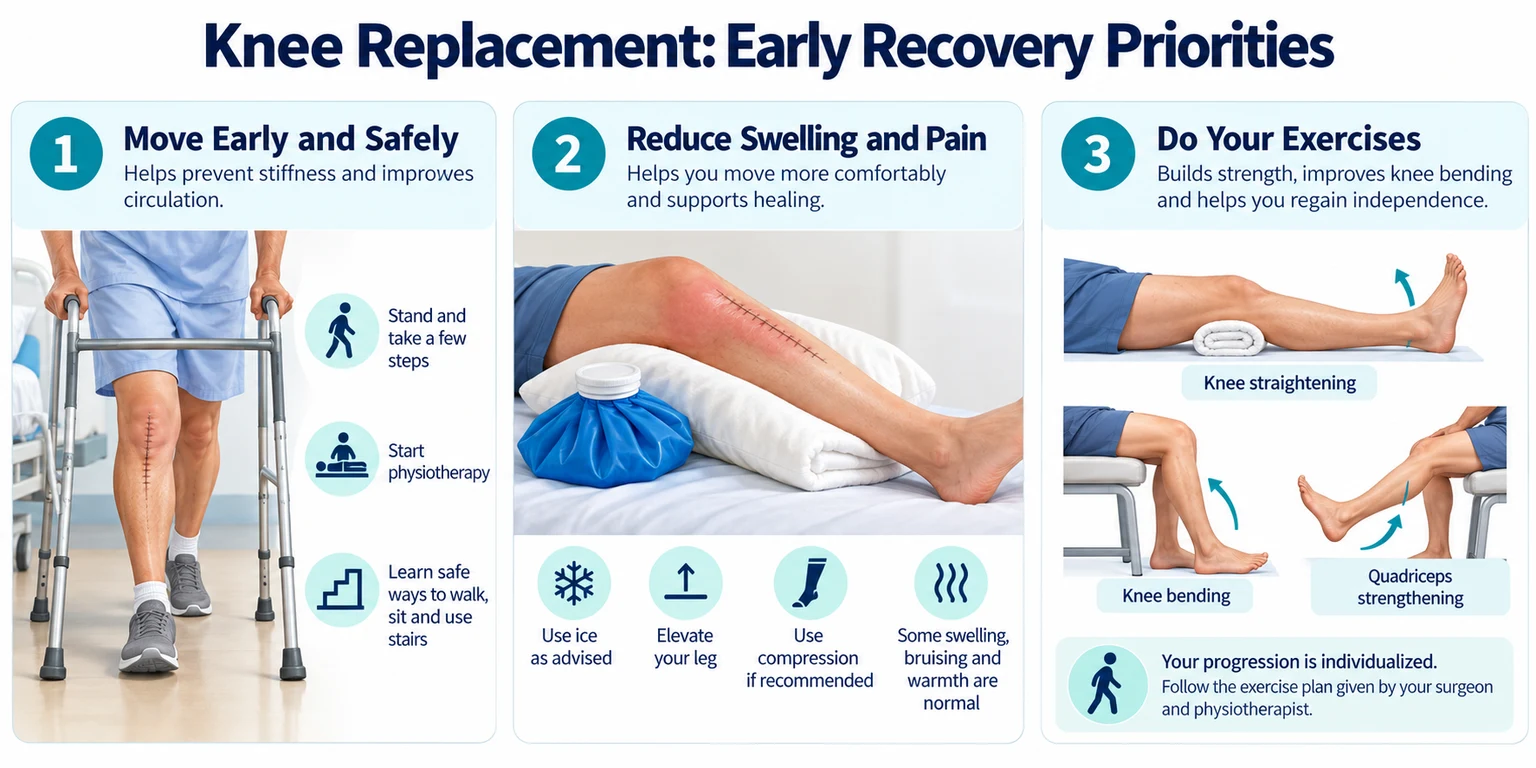
Knee Replacement: Early Recovery Priorities
Knee Replacement: Early Recovery Priorities. An illustrated summary of this article; individual assessment and recovery plans vary.
View full-size image (opens in a new tab)Three to Six Months: Returning to an Active Lifestyle
At this point, many patients enjoy dramatic improvements in quality of life. They often return to:
The artificial knee begins to feel more natural as muscles regain strength.
Six Months to One Year: Complete Recovery
Although most recovery occurs within the first three months, healing continues for up to a year. By this stage, patients generally experience:
Consistent exercise remains important to maintain strength and protect the new joint.
Tips to Recover Faster After Knee Replacement
You can maximize your recovery by:
Following your surgeon’s rehabilitation plan is one of the most important factors influencing recovery.
Is Robotic Knee Replacement Recovery Faster?
Robotic-assisted knee replacement allows surgeons to perform highly accurate bone preparation and implant placement. Potential advantages include:
While individual recovery varies, many patients regain mobility sooner compared with conventional techniques.
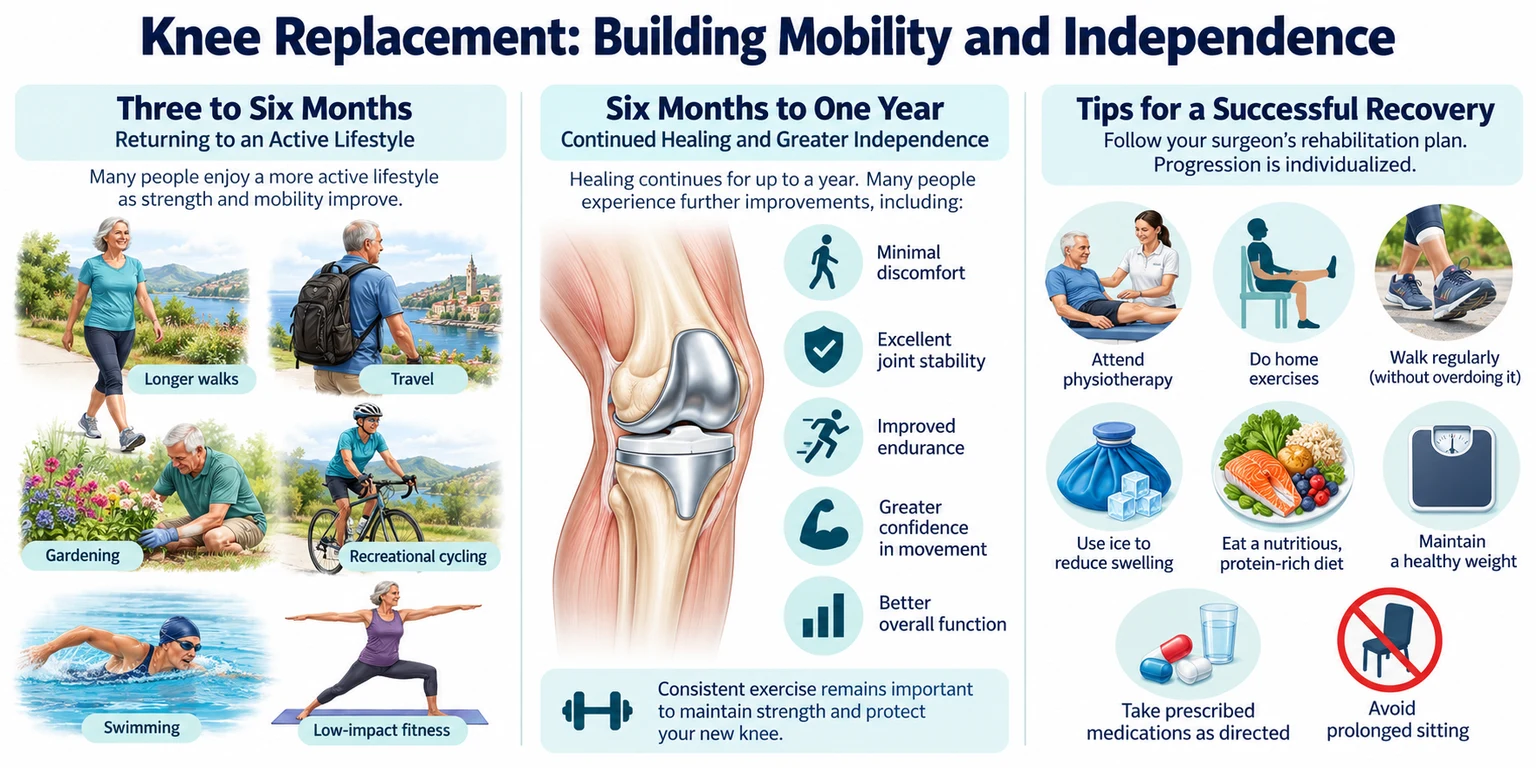
Knee Replacement: Building Mobility and Independence
Knee Replacement: Building Mobility and Independence. An illustrated summary of this article; individual assessment and recovery plans vary.
View full-size image (opens in a new tab)Conclusion
Every patient’s recovery journey is unique, but understanding the expected timeline helps set realistic expectations. Staying committed to physiotherapy, maintaining an active lifestyle, and following your surgeon’s advice are key to achieving the best outcome.
If you’re considering knee replacement or recovering after surgery, choosing an experienced orthopaedic surgeon can make a significant difference in both your recovery and long-term results.
“Joint preservation and evidence-based conditioning are paramount. When surgical intervention is required, minimally invasive arthroscopy allows patients and competitive athletes to restore painless stability and confident motion.”
Robotic Total Knee Replacement Guide
Advanced Robotic Knee Replacement Options & Recovery | Dr. Pradyumna R. Watch Dr. Pradyumna R explain clinical diagnosis, surgical repair techniques, and recovery milestones.
Frequently Asked Questions
Most patients recover sufficiently for daily activities within 6-12 weeks, while complete recovery may take 6-12 months.
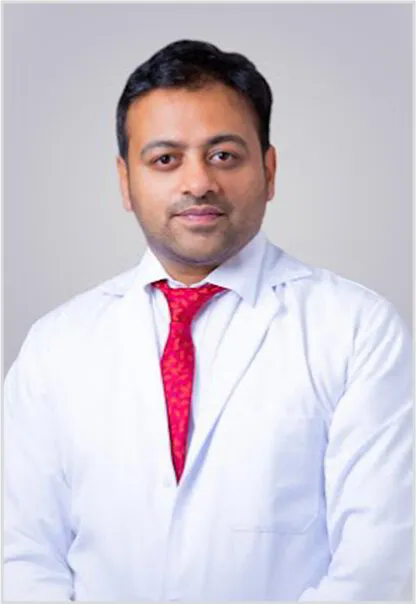
Dr. Pradyumna R
Verified SpecialistDr. Pradyumna R is a Consultant Orthopaedic Surgeon | Knee & Shoulder Surgery | Sports Medicine | Arthroscopy | Joint Replacement. He completed sub-specialty fellowship training in shoulder, elbow, and knee arthroscopy at the Technical University of Munich (TUM), Germany. He has performed over 5,000+ successful joint surgeries and practices at Bangalore Orthopaedic Clinic (JP Nagar) and Manipal Hospitals.