
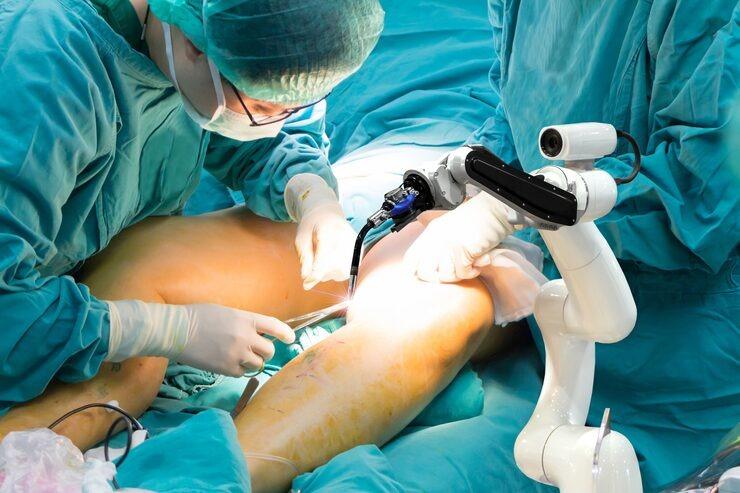
Learn how robotic knee replacement works, its benefits, recovery, and why it offers better precision for faster healing and long-lasting results.
Reviewed by: Dr. Pradyumna R
Knee pain caused by arthritis or injury can severely limit mobility and quality of life. When medications, physiotherapy, and lifestyle changes no longer provide relief, Total Knee Replacement (TKR) becomes a reliable solution. In recent years, robotic total knee replacement has transformed this procedure bringing in unmatched precision, personalization, and improved outcomes.
What is Robotic Total Knee Replacement?
Robotic Total Knee Replacement in Bangalore is an advanced surgical procedure where a robotic-assisted system helps the surgeon perform knee replacement with greater accuracy. Contrary to common belief, the robot does not operate independently. Instead, it acts as a highly sophisticated tool controlled entirely by the surgeon.
The goal remains the same as traditional knee replacement:
However, robotics enhances how precisely each of these steps is executed.
How Does Robotic Knee Replacement Work?
The procedure involves three key stages:
1. Pre-Surgical Planning
Before surgery, advanced imaging such as a CT scan creates a 3D model of your knee joint. This allows the surgeon to:
Whether you are being evaluated for robotic knee replacement, unicondylar knee replacement, or a high tibial osteotomy, precise pre-surgical planning by a skilled unicondylar knee replacement surgeon in Bangalore or high tibial osteotomy surgeon in Bangalore ensures that your treatment path is tailored to your specific condition.
2. Intraoperative Precision
During surgery:
The system ensures:
For patients undergoing ligament-related procedures such as ACL reconstruction surgery in Bangalore or PCL reconstruction performed by an experienced PCL reconstruction surgeon in Bangalore, the same commitment to intraoperative precision guides every incision and repair.
3. Implant Placement
The artificial knee components are placed precisely according to the pre-surgical plan. This improves:
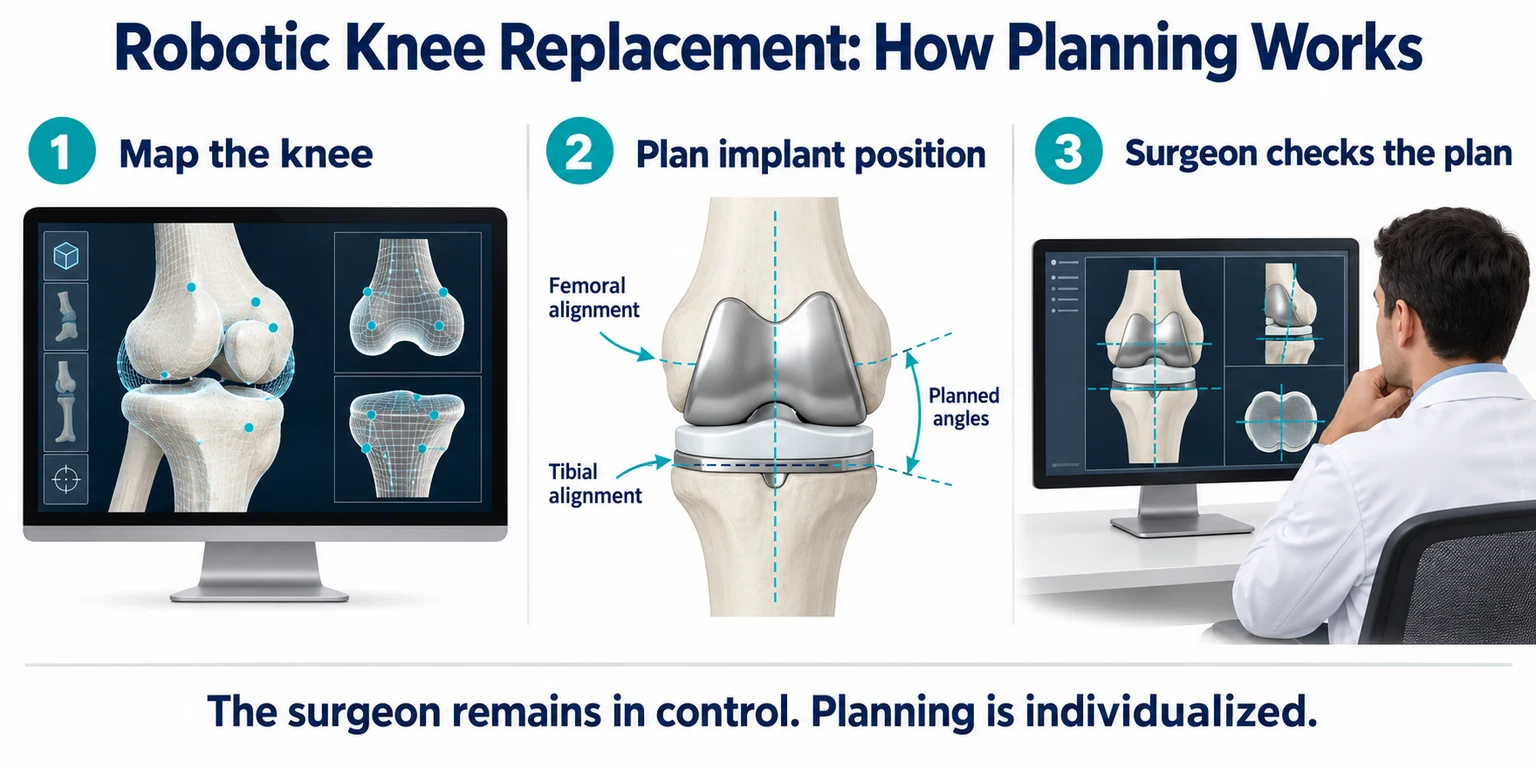
Robotic Knee Replacement: How Planning Works
Robotic Knee Replacement: How Planning Works. An illustrated summary of this article; individual assessment and recovery plans vary.
View full-size image (opens in a new tab)Key Benefits of Robotic Knee Replacement
Reduced pain Shorter hospital stay Quicker return to daily activities
Who is a Candidate?
Robotic Total Knee Replacement is ideal for patients with:
It is especially beneficial for patients seeking high precision and faster recovery outcomes. Patients dealing with sports-related injuries may also benefit from consulting a sports medicine specialist in Bangalore, who can determine whether procedures such as meniscus surgery in Bangalore, knee arthroscopy performed by a qualified knee arthroscopy surgeon in Bangalore, or advanced biological treatments like Regeneten patch surgery in Bangalore are appropriate before considering a full knee replacement.
Recovery & Rehabilitation
Recovery after robotic knee replacement is generally smoother compared to conventional surgery.
Typical timeline:
Physiotherapy plays a crucial role in restoring:
Is Robotic Knee Replacement Safe?
Yes, robotic-assisted knee replacement is considered safe and effective when performed by an experienced orthopedic surgeon. Whether you are looking for a trusted robotic knee replacement surgeon in Bangalore or seeking expert care for complex ligament and soft tissue conditions, choosing a specialist with a comprehensive skill set ensures the best possible outcomes. The technology enhances surgical control rather than replacing the surgeon's expertise.
Conclusion
Robotic Total Knee Replacement represents the future of orthopedic surgery combining human expertise with technological precision. For patients suffering from debilitating knee pain, it offers a more accurate, personalized, and faster path to recovery.
Book a Consultation
If knee pain is affecting your daily life, it may be time to explore advanced treatment options.
•
FAQs on Robotic Total Knee Replacement
Robotic knee replacement offers higher precision and better implant alignment, which can lead to improved outcomes, less pain, and faster recovery compared to traditional methods.
No. The surgery is fully controlled by the surgeon. The robotic system only assists by enhancing accuracy and providing real-time guidance.
With proper care, implants can last 15-25 years or more, and precise placement with robotics may further improve longevity.
Yes, most patients experience quicker recovery, less tissue damage, and reduced post-operative pain compared to conventional surgery.
Yes, it is a safe and well-established procedure when performed by a trained orthopedic surgeon. The technology enhances surgical precision and reduces complications.
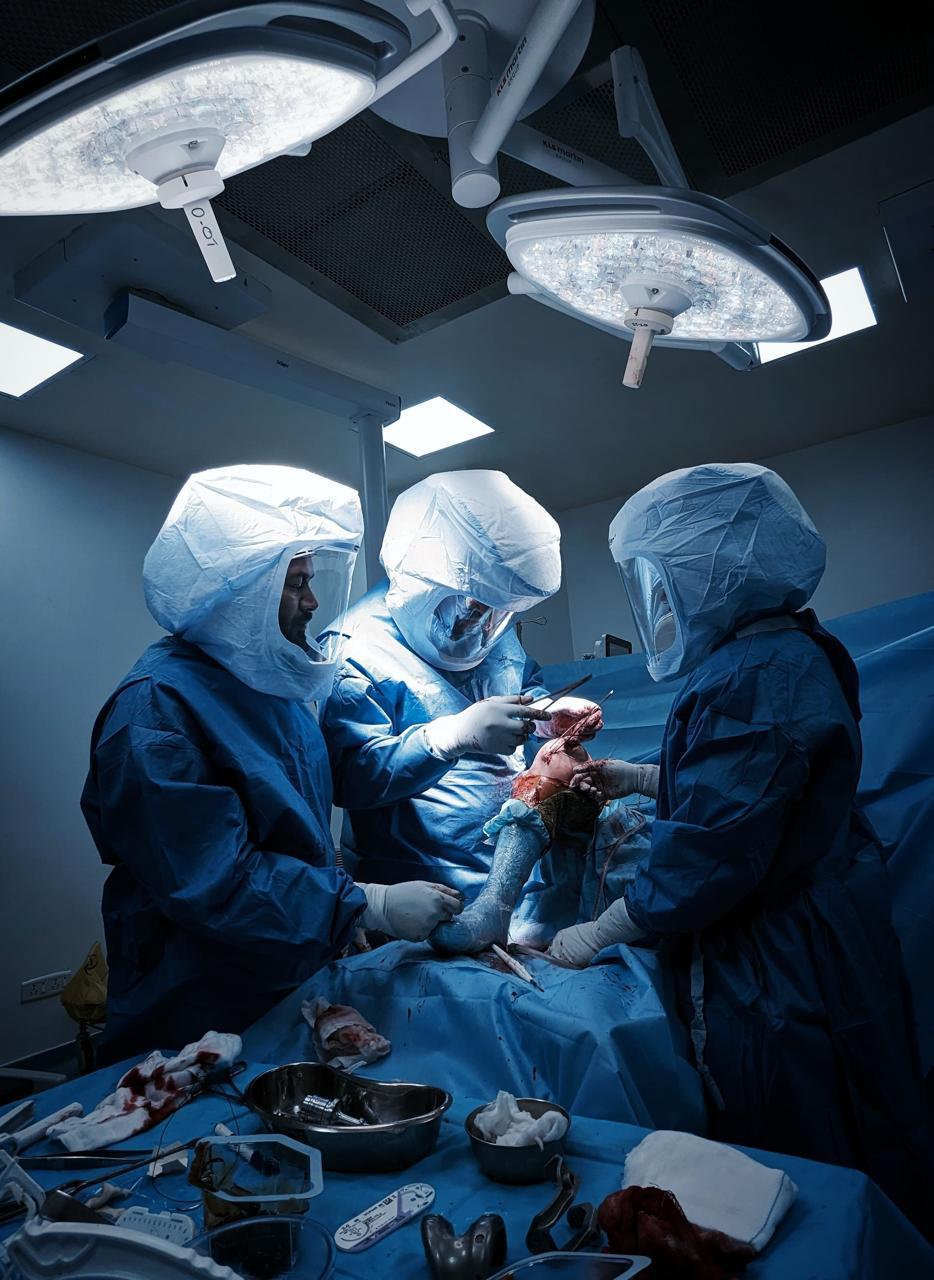
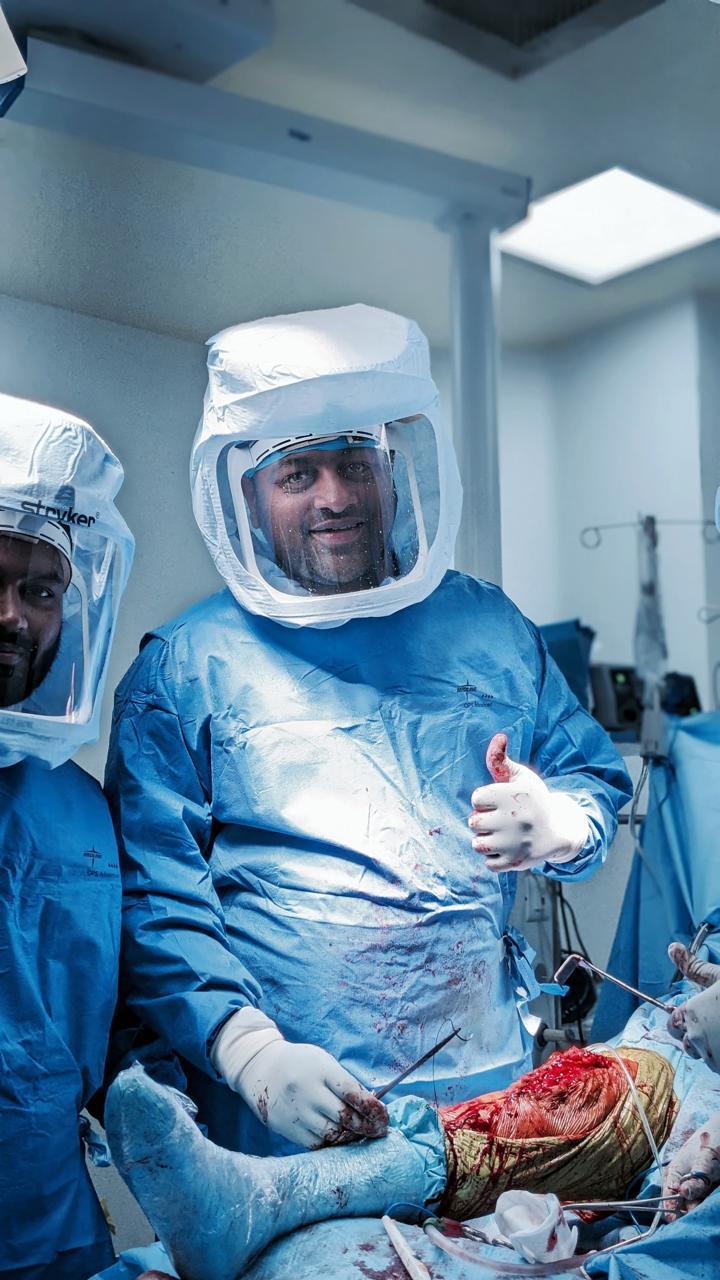
Operation Theatre
Robotic Knee Surgery Images
Inside the OT during robotic knee replacement procedures.
10:00 AM – 03:00 PM 06:00 PM – 09:30 PM
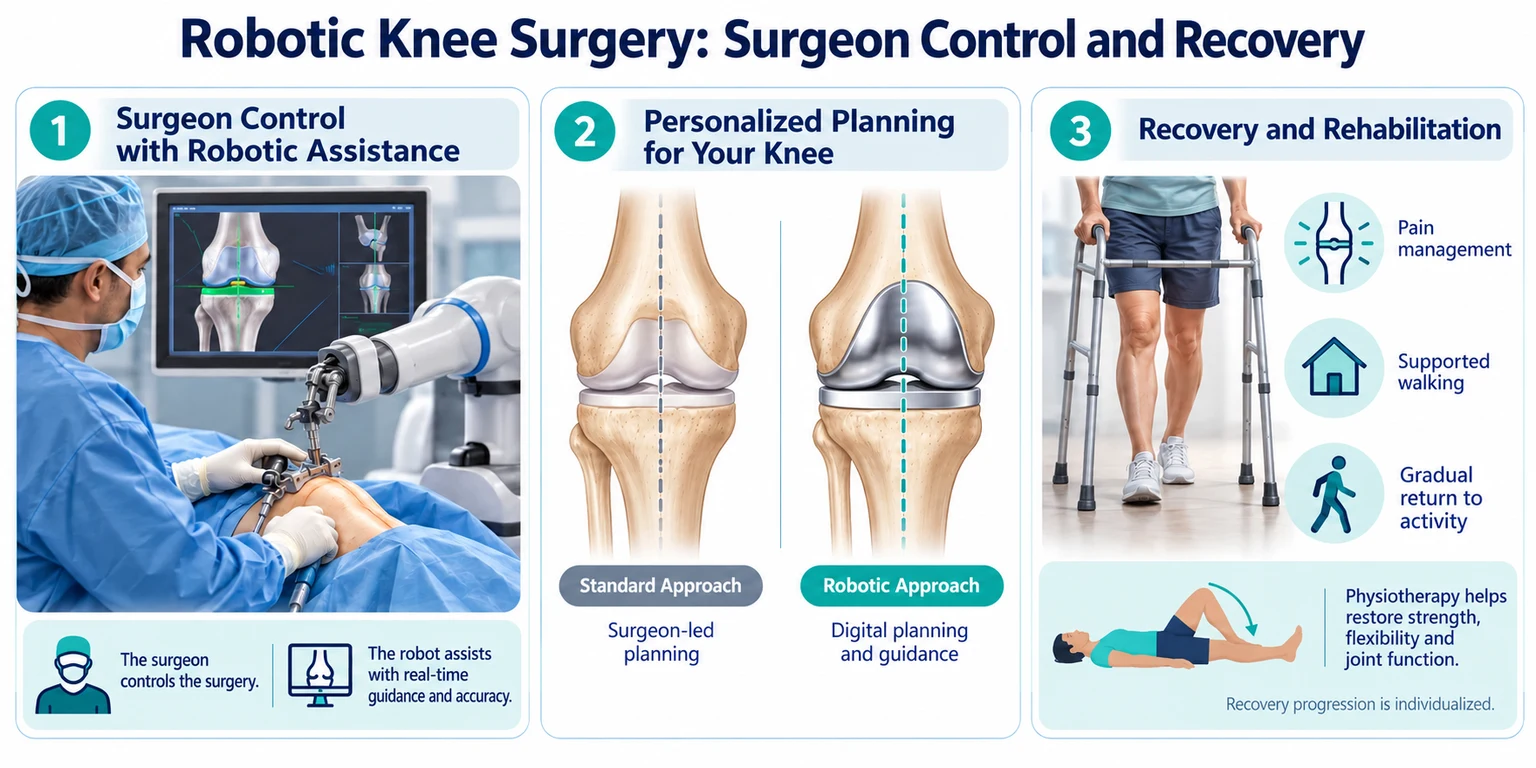
Robotic Knee Surgery: Surgeon Control and Recovery
Robotic Knee Surgery: Surgeon Control and Recovery. An illustrated summary of this article; individual assessment and recovery plans vary.
View full-size image (opens in a new tab)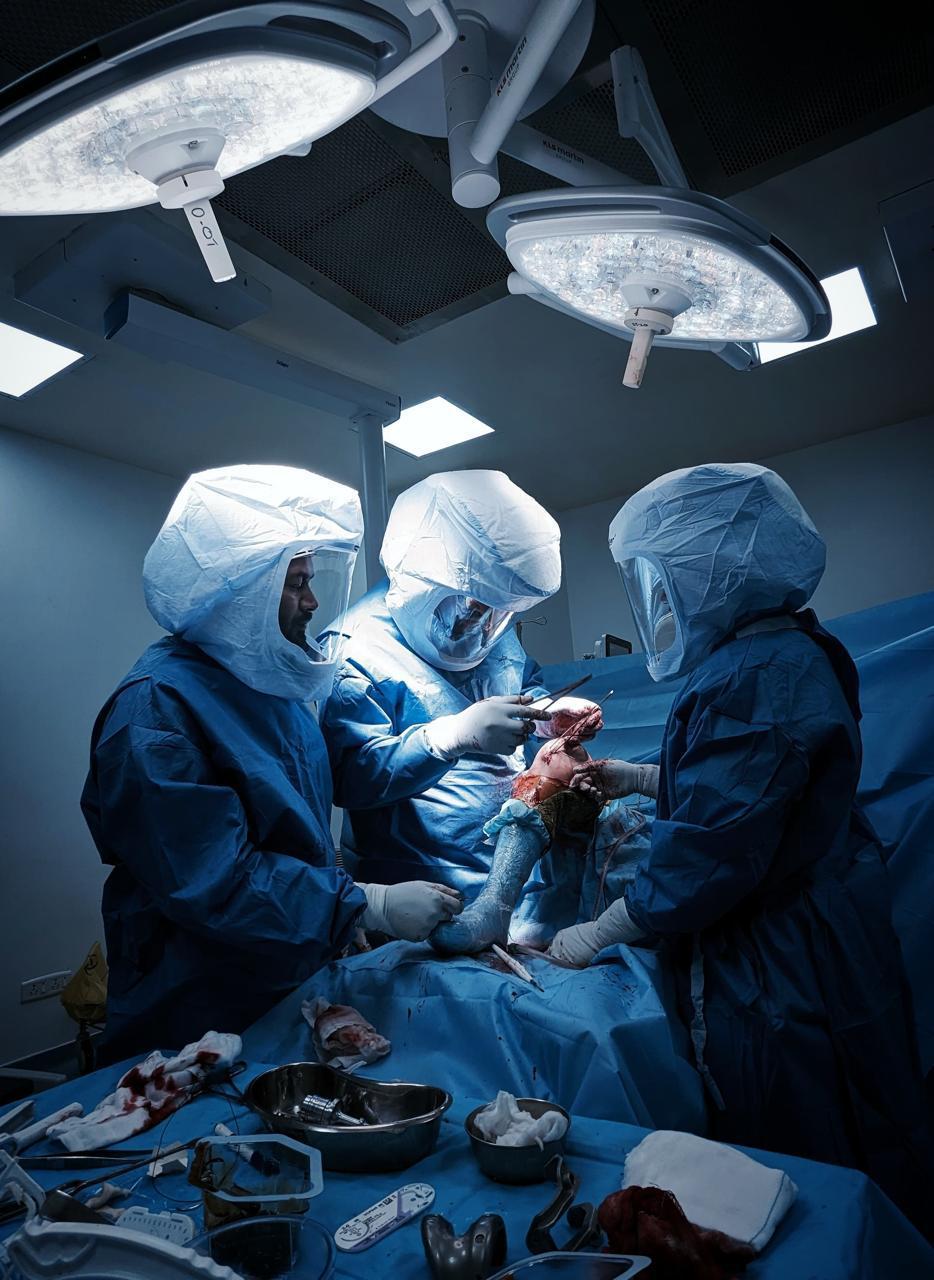
“Joint preservation and evidence-based conditioning are paramount. When surgical intervention is required, minimally invasive arthroscopy allows patients and competitive athletes to restore painless stability and confident motion.”
Robotic Total Knee Replacement Guide
Advanced Robotic Knee Replacement Options & Recovery | Dr. Pradyumna R. Watch Dr. Pradyumna R explain clinical diagnosis, surgical repair techniques, and recovery milestones.
Frequently Asked Questions
Robotic knee replacement offers higher precision and better implant alignment, which can lead to improved outcomes, less pain, and faster recovery compared to traditional methods.

Dr. Pradyumna R
Verified SpecialistDr. Pradyumna R is a Consultant Orthopaedic Surgeon | Knee & Shoulder Surgery | Sports Medicine | Arthroscopy | Joint Replacement. He completed sub-specialty fellowship training in shoulder, elbow, and knee arthroscopy at the Technical University of Munich (TUM), Germany. He has performed over 5,000+ successful joint surgeries and practices at Bangalore Orthopaedic Clinic (JP Nagar) and Manipal Hospitals.