
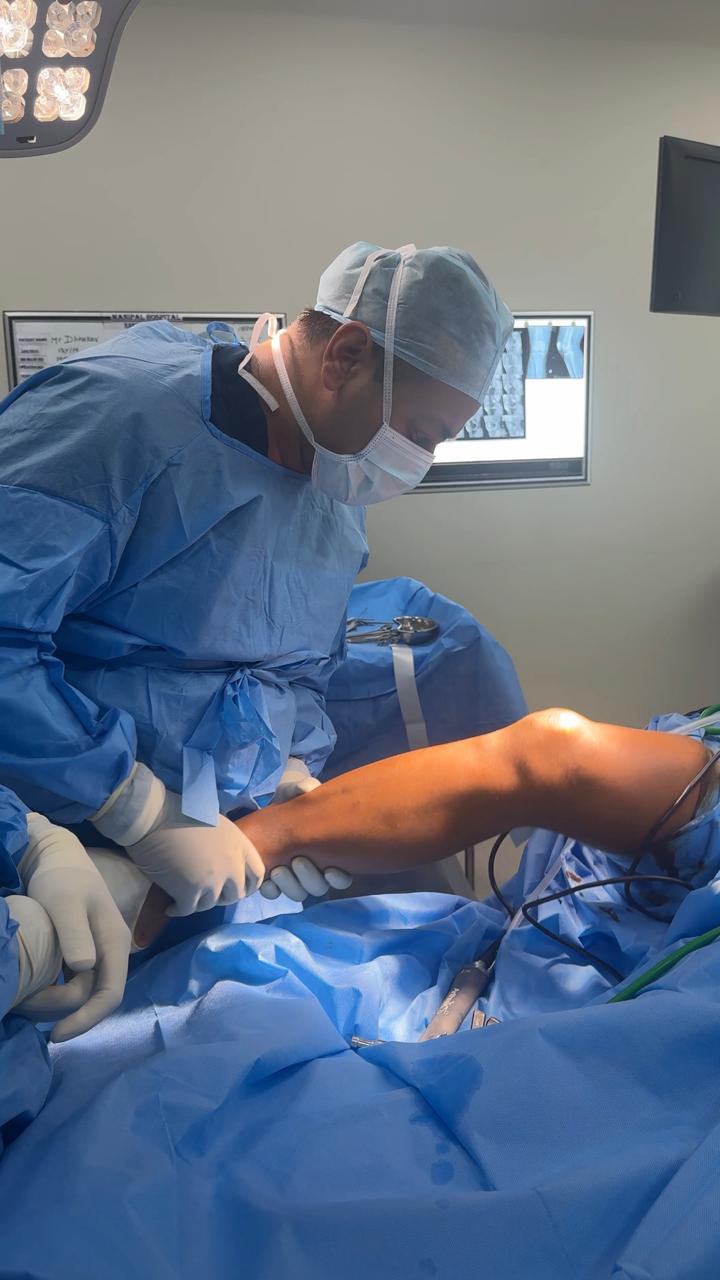
Looking for alternatives to knee replacement in Bangalore? Learn about physiotherapy, PRP injections, weight loss, medications, and when surgery may become necessary. Expert guidance from Dr. Pradyumna R.
Reviewed by: Dr. Pradyumna R
Knee pain caused by arthritis doesn’t always mean you need surgery. In fact, many patients can manage their symptoms effectively with non-surgical treatments for several years before considering knee replacement.
The key lies in early diagnosis, lifestyle changes, and choosing the right treatment plan tailored to the stage of arthritis.
If you’re searching for alternatives to knee replacement in Bangalore, it’s important to understand that there is no one-size-fits-all solution. While some patients respond remarkably well to physiotherapy and injections, others may eventually benefit from surgery.
An experienced orthopedic specialist can help determine the most appropriate treatment based on your symptoms, X-rays, activity level, and long-term goals.
Understanding Knee Arthritis
Knee arthritis occurs when the protective cartilage cushioning the ends of the bones gradually wears away. This leads to pain, stiffness, swelling, and difficulty performing everyday activities such as climbing stairs, walking long distances, or getting up from a chair.
The earlier arthritis is diagnosed, the greater the chance of managing symptoms without surgery. Patients with mild to moderate arthritis often achieve excellent relief through conservative treatment.
If you’ve recently been diagnosed with arthritis, learning more about the knee arthritis treatment options available can help you make informed decisions before considering surgery.
1. Physiotherapy: The First Step Before Surgery
Physiotherapy remains one of the most effective alternatives to knee replacement for early and moderate arthritis. A personalized rehabilitation program focuses on strengthening the muscles around the knee, improving flexibility, and restoring joint stability.
Stronger muscles reduce the load transmitted through the damaged cartilage, helping decrease pain and improve mobility.
A typical physiotherapy program includes:
Many patients experience noticeable improvement after six to eight weeks of supervised therapy combined with a home exercise program.
2. Weight Loss Can Significantly Reduce Knee Pain
Excess body weight places tremendous stress on the knee joints. Research shows that every kilogram of weight lost reduces the force transmitted across the knee several times during walking.
Even a modest weight loss of 5-10% can:
Weight management is often one of the simplest and most effective ways to delay knee replacement.
3. Medications for Symptom Relief
Although medications cannot reverse arthritis, they help manage pain and inflammation, allowing patients to remain active.
Treatment may include:
These medications should always be used under medical supervision, especially in patients with kidney disease, stomach ulcers, or heart conditions.
4. PRP (Platelet-Rich Plasma) Injections
PRP therapy has become an increasingly popular treatment for selected patients with early to moderate knee arthritis. PRP is prepared using the patient’s own blood, which is processed to concentrate platelets containing natural growth factors.
The injection may help reduce inflammation, improve pain, and enhance joint function. While PRP does not regenerate severely damaged cartilage or cure arthritis, it can delay surgery and improve quality of life in carefully selected patients.
Patients considering PRP should undergo a detailed evaluation to determine whether they are suitable candidates, as outcomes vary depending on the stage of arthritis.
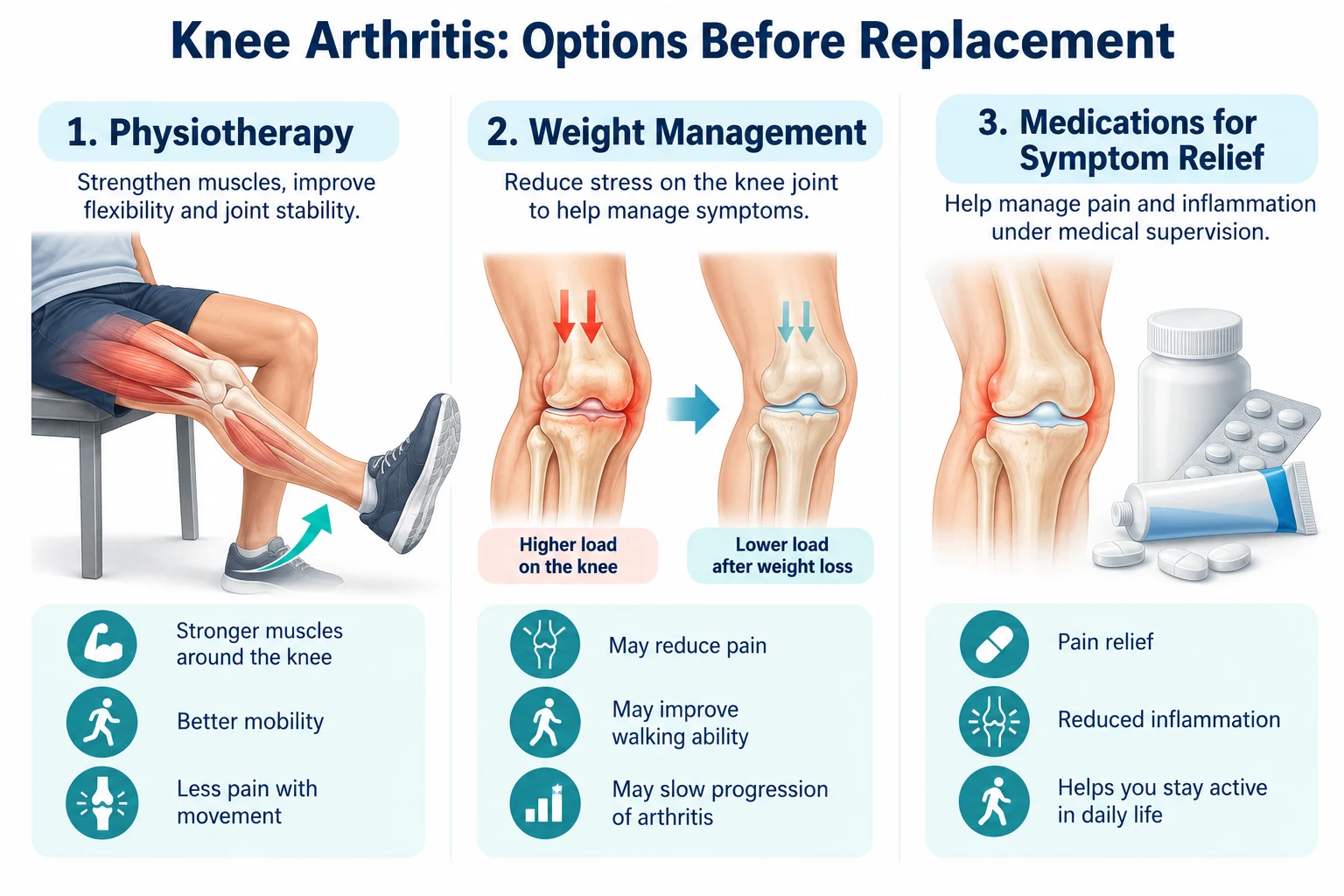
Knee Arthritis: Options Before Replacement
Knee Arthritis: Options Before Replacement. An illustrated summary of this article; individual assessment and recovery plans vary.
View full-size image (opens in a new tab)5. Exercise and Activity Modification
Remaining active is important-but choosing the right activities matters. Low-impact exercises help maintain joint mobility while minimizing stress on the knee.
Recommended activities include:
High-impact activities such as running, jumping, and repetitive squatting may aggravate symptoms in advanced arthritis.
6. Knee Braces and Supportive Devices
For patients with arthritis affecting one side of the knee, specially designed unloading braces can reduce pain by redistributing pressure across the joint.
Walking sticks, shoe modifications, and supportive footwear can also improve stability and reduce discomfort during daily activities.
Are Stem Cell Treatments Worth Considering?
Stem cell therapy receives considerable attention, but patients should understand that scientific evidence is still evolving. While ongoing research is promising, stem cell treatment has not yet become standard care for knee arthritis.
Patients should be cautious about clinics promising complete cartilage regeneration or guaranteed avoidance of surgery.
A consultation with an orthopedic specialist can help determine whether regenerative therapies are appropriate based on current evidence.
When Is Knee Replacement the Better Option?
Despite the benefits of conservative treatment, there are situations where knee replacement offers the best long-term outcome.
Surgery may be recommended when:
Modern robotic knee replacement techniques offer greater surgical precision, improved implant positioning, and faster recovery for suitable patients.
If conservative treatment is no longer providing relief, discussing robotic knee replacement surgery with your orthopedic surgeon can help you understand the benefits and expected recovery.
Why Early Evaluation Matters
Many people delay seeking treatment until arthritis has significantly progressed. However, early intervention often allows patients to control symptoms, maintain an active lifestyle, and postpone surgery for several years.
A comprehensive evaluation considers not only X-rays but also your pain level, mobility, occupation, lifestyle, and treatment goals.
Every patient deserves an individualized plan rather than a one-size-fits-all approach.
If you’re looking for alternatives to knee replacement in Bangalore, consulting an orthopedic surgeon early can help you explore all available options and make confident decisions about your knee health.
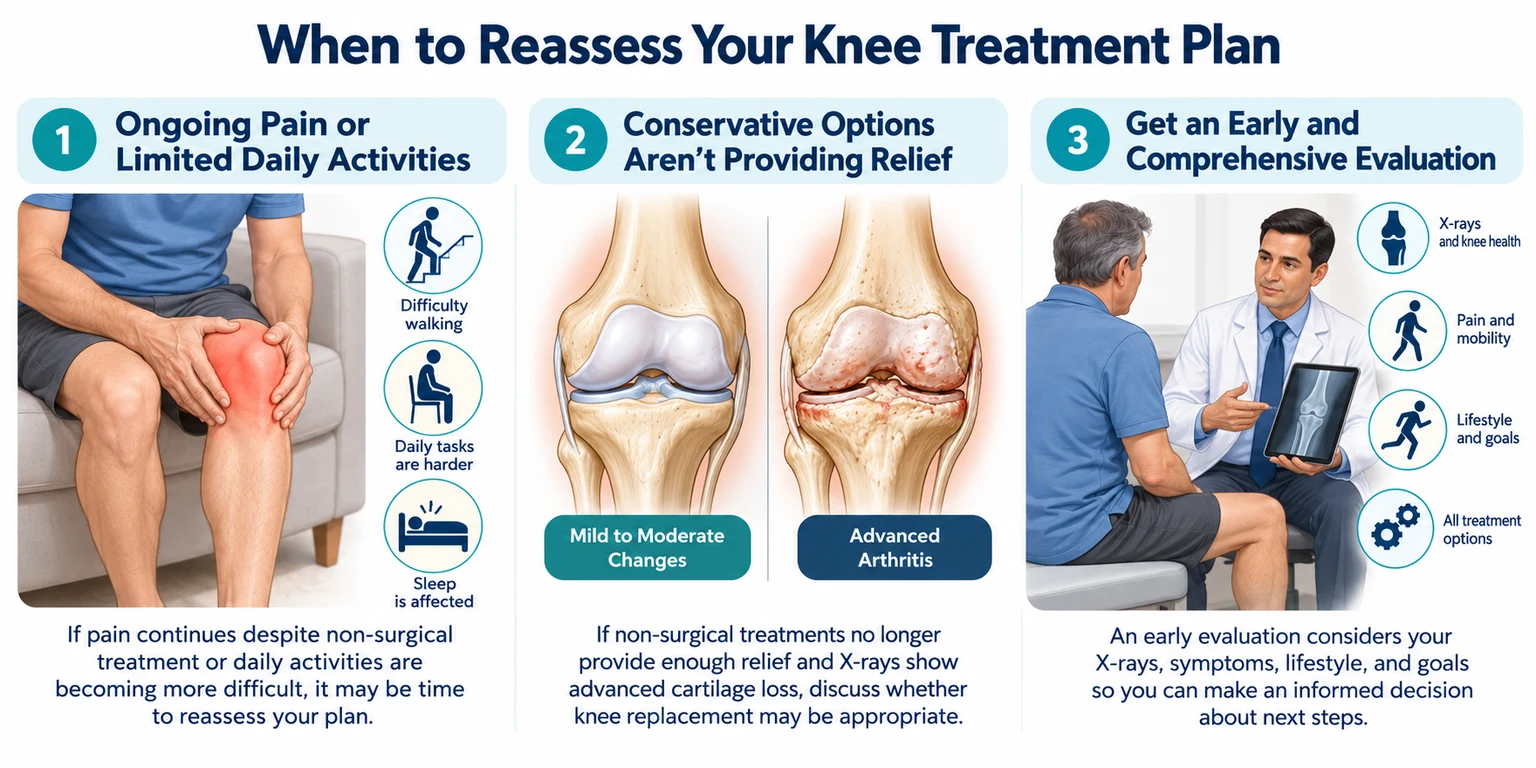
When to Reassess Your Knee Treatment Plan
When to Reassess Your Knee Treatment Plan. An illustrated summary of this article; individual assessment and recovery plans vary.
View full-size image (opens in a new tab)“Joint preservation and evidence-based conditioning are paramount. When surgical intervention is required, minimally invasive arthroscopy allows patients and competitive athletes to restore painless stability and confident motion.”
Robotic Total Knee Replacement Guide
Advanced Robotic Knee Replacement Options & Recovery | Dr. Pradyumna R. Watch Dr. Pradyumna R explain clinical diagnosis, surgical repair techniques, and recovery milestones.
Frequently Asked Questions
Yes. Many patients with mild to moderate arthritis can successfully manage symptoms through physiotherapy, weight management, medications, injections, and lifestyle modifications.

Dr. Pradyumna R
Verified SpecialistDr. Pradyumna R is a Consultant Orthopaedic Surgeon | Knee & Shoulder Surgery | Sports Medicine | Arthroscopy | Joint Replacement. He completed sub-specialty fellowship training in shoulder, elbow, and knee arthroscopy at the Technical University of Munich (TUM), Germany. He has performed over 5,000+ successful joint surgeries and practices at Bangalore Orthopaedic Clinic (JP Nagar) and Manipal Hospitals.