
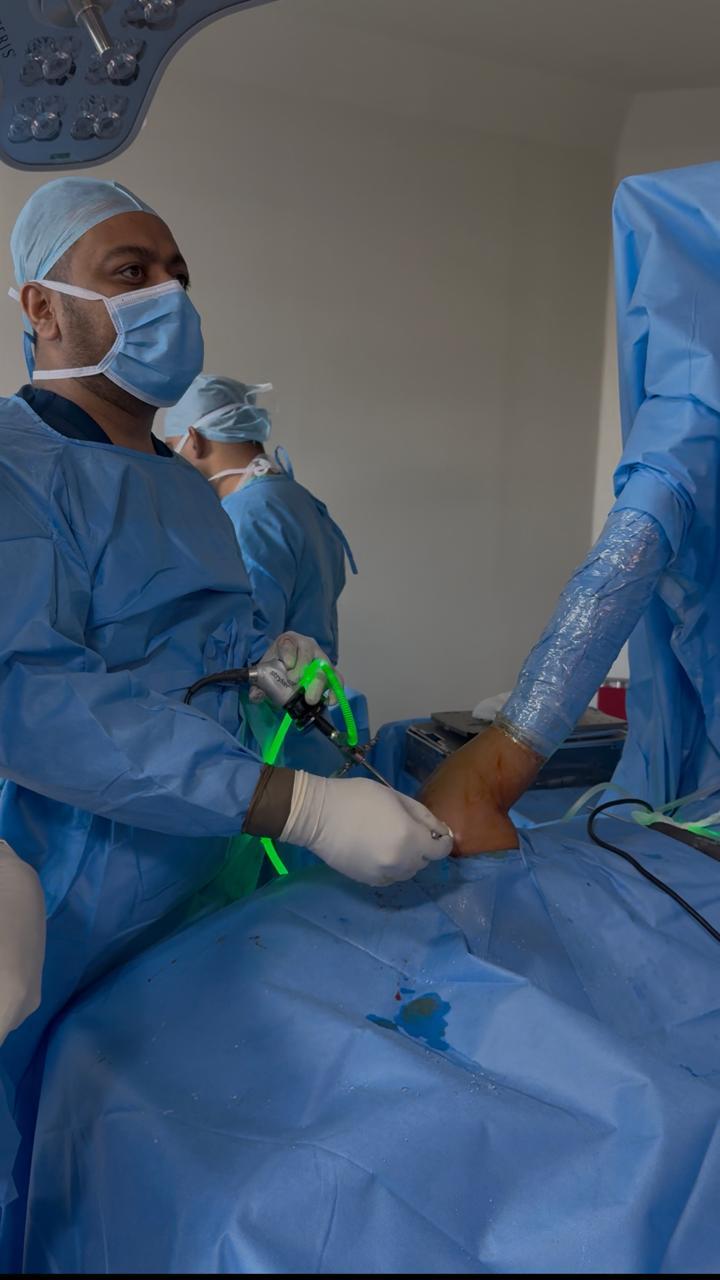
Learn about scapula fracture symptoms, causes, diagnosis and treatment options in Bangalore. Consult Dr. Pradyumna R for expert shoulder blade fracture care.
Reviewed by: Dr. Pradyumna R
A scapula fracture, commonly called a shoulder blade fracture, is an uncommon but potentially serious injury involving the flat triangular bone at the back of the shoulder. Because the scapula is surrounded and protected by strong muscles and the chest wall, fractures often occur after significant trauma such as a road traffic accident, a fall from height, or a high-impact sports injury. The scapula plays an important role in shoulder stability and movement. Depending on the location and displacement of the fracture, an injury can affect the scapular body, neck, glenoid (shoulder socket), acromion, or coracoid process. If you are looking for scapula fracture treatment in Bangalore, early assessment by an orthopaedic surgeon experienced in shoulder injuries can help determine whether conservative management is sufficient or whether surgical fixation is required.
What Are the Symptoms of a Scapula Fracture?
Symptoms vary depending on the severity and location of the fracture. Common signs include:
Because scapula fractures are often caused by high-energy trauma, associated injuries to the ribs, lungs, clavicle, or surrounding structures may also occur.
What Causes a Scapula Fracture?
The scapula is a strong bone and usually requires considerable force to fracture. Common causes include:
Road traffic accidents
High-energy impacts involving cars or two-wheelers are an important cause.
Falls from height
Landing directly on the shoulder or upper back can transmit significant force to the scapula.
Sports injuries
Contact sports, cycling accidents, or high-impact sports injuries can occasionally result in scapular fractures.
Direct trauma
A strong direct blow to the shoulder blade may cause a fracture.
Less commonly, fractures can occur after relatively minor trauma when the bone has been weakened by osteoporosis or another underlying bone condition.
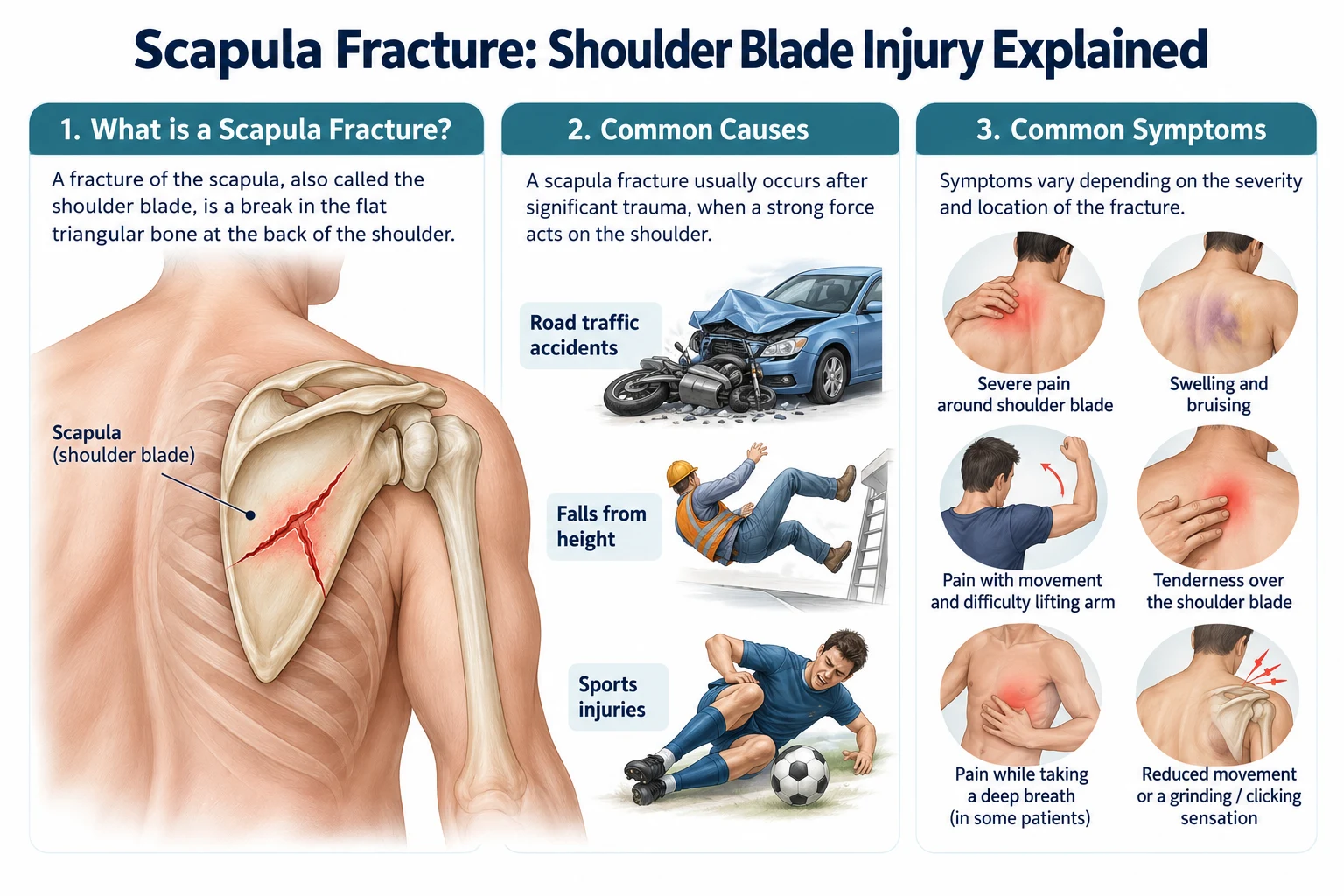
Scapula Fracture: Shoulder Blade Injury Explained
Scapula Fracture: Shoulder Blade Injury Explained. An illustrated summary of this article; individual assessment and recovery plans vary.
View full-size image (opens in a new tab)How Is a Scapula Fracture Diagnosed?
Diagnosis begins with a clinical examination. The orthopaedic surgeon assesses the location of pain, swelling, shoulder movement, neurological function, and signs of associated injuries. Imaging may include:
Accurate imaging is particularly important when deciding whether scapula fracture surgery in Bangalore may be necessary.
Treatment for Scapula Fractures
Treatment depends on the fracture pattern, displacement, involvement of the shoulder joint, associated injuries, and the patient’s overall condition.
Non-Surgical Treatment
Most uncomplicated or minimally displaced scapula fractures can be managed without surgery. Treatment may include:
Keeping the shoulder immobilised for too long can contribute to stiffness. Therefore, the timing of movement and rehabilitation should be guided by the treating orthopaedic surgeon.
When Is Scapula Fracture Surgery Required?
Surgery is not required for every scapula fracture. It may be considered when there is substantial displacement, significant deformity, instability, certain fractures involving the glenoid or shoulder joint, or particular complex fracture patterns. Surgical treatment generally aims to restore the anatomy and stability of the shoulder using plates and screws where appropriate. The decision is individualised after evaluating imaging findings, the patient’s functional requirements, and associated injuries.
Recovery After a Scapula Fracture
Bone healing commonly takes approximately 6–12 weeks, although recovery varies considerably depending on the type and severity of fracture. For patients treated without surgery, rehabilitation generally progresses from protected movement to gradually increasing shoulder mobility and strengthening. After surgery, rehabilitation is carefully planned to protect the repair while preventing excessive stiffness. Returning to strenuous work, gym activities, or sports should occur only after adequate bone healing, strength, and shoulder function have returned.
Can a Scapula Fracture Cause Long-Term Shoulder Problems?
Many patients recover good shoulder function, particularly when the fracture is appropriately treated and rehabilitation is completed. Complex fractures can sometimes lead to persistent stiffness, weakness, altered shoulder mechanics, chronic shoulder pain, or post-traumatic arthritis, particularly when the glenoid surface is involved. Early diagnosis, appropriate fracture management, and structured physiotherapy can help reduce these risks.
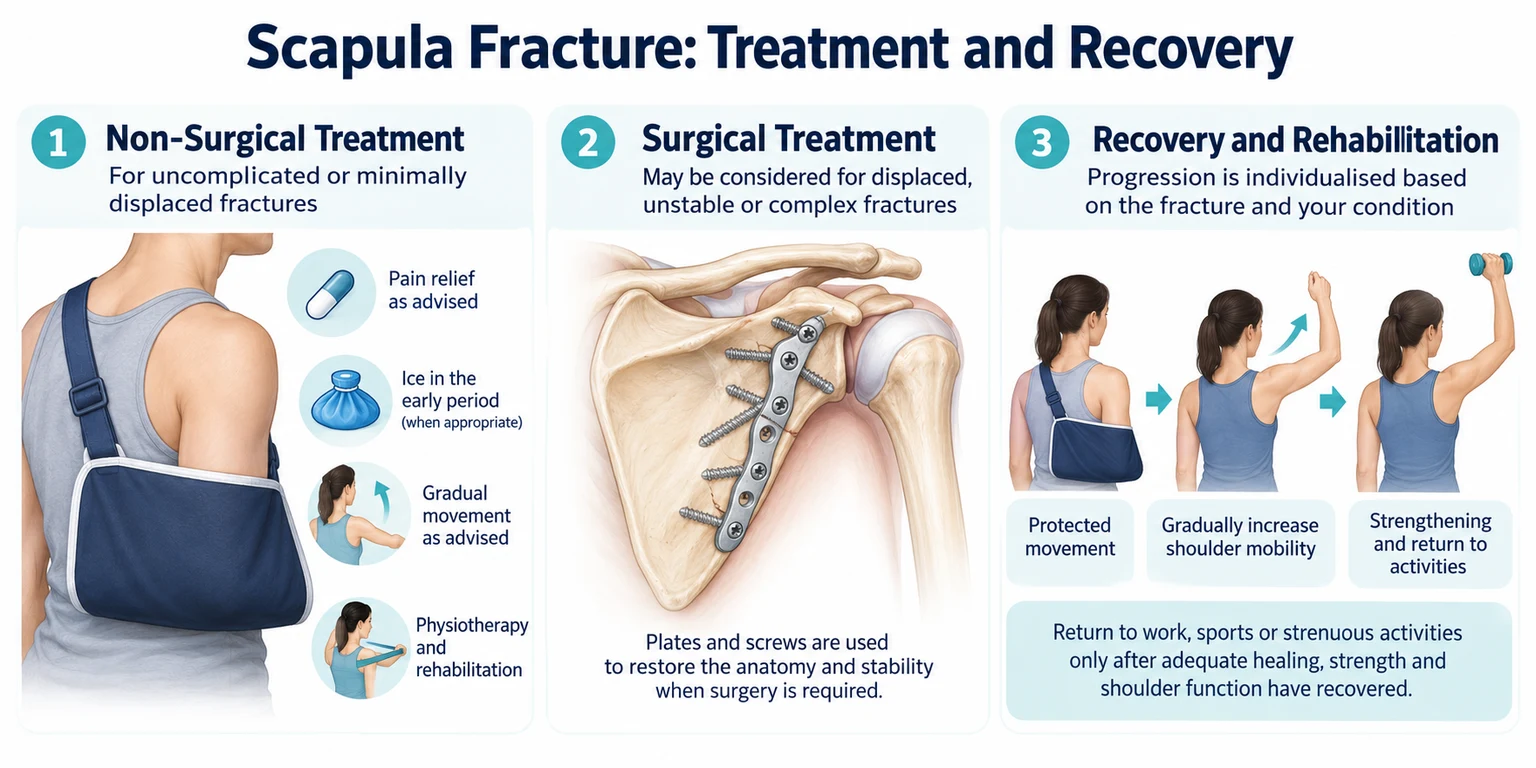
Scapula Fracture: Treatment and Recovery
Scapula Fracture: Treatment and Recovery. An illustrated summary of this article; individual assessment and recovery plans vary.
View full-size image (opens in a new tab)Consult Dr. Pradyumna R for Scapula & Shoulder Injuries in Bangalore
If you have sustained a shoulder injury following an accident, fall, or sports injury, early assessment can help identify fractures and associated injuries and establish an appropriate treatment plan.
Dr. Pradyumna R Consultant Orthopaedic Surgeon | Knee & Shoulder Surgery | Sports Medicine | Arthroscopy | Joint Replacement
“Joint preservation and evidence-based conditioning are paramount. When surgical intervention is required, minimally invasive arthroscopy allows patients and competitive athletes to restore painless stability and confident motion.”
Shoulder Treatment & Recovery Journey
Shoulder Surgery Patient Journey & Specialized Care | Dr. Pradyumna R. Watch Dr. Pradyumna R explain clinical diagnosis, surgical repair techniques, and recovery milestones.
Frequently Asked Questions
Common symptoms include shoulder blade pain, swelling, bruising, tenderness, difficulty moving the arm, and pain when lifting or rotating the shoulder.
Dr. Pradyumna R
Verified SpecialistDr. Pradyumna R is a Consultant Orthopaedic Surgeon | Knee & Shoulder Surgery | Sports Medicine | Arthroscopy | Joint Replacement. He completed sub-specialty fellowship training in shoulder, elbow, and knee arthroscopy at the Technical University of Munich (TUM), Germany. He has performed over 5,000+ successful joint surgeries and practices at Bangalore Orthopaedic Clinic (JP Nagar) and Manipal Hospitals.