Learn what improves after shoulder replacement surgery, which activities are safe, recovery tips, precautions, and expert care options in Bangalore.
Reviewed by: Dr. Pradyumna R
Shoulder replacement surgery has transformed the lives of thousands of individuals suffering from severe arthritis, advanced rotator cuff damage, complex fractures, or chronic shoulder pain. One of the most common anxieties patients experience before scheduling their procedure is: "Will I ever be able to live normally again?"
The excellent news is that the vast majority of patients return to a comfortable, active, and completely independent lifestyle following a shoulder arthroplasty. In fact, many individuals are able to resume favorite hobbies they had abandoned years ago due to debilitating pain.
However, just like any joint replacement procedure, achieving long-term success requires a clear understanding of the recovery process, specific post-operative precautions, and minor lifestyle adjustments to protect your new joint.
What Is Shoulder Replacement Surgery?
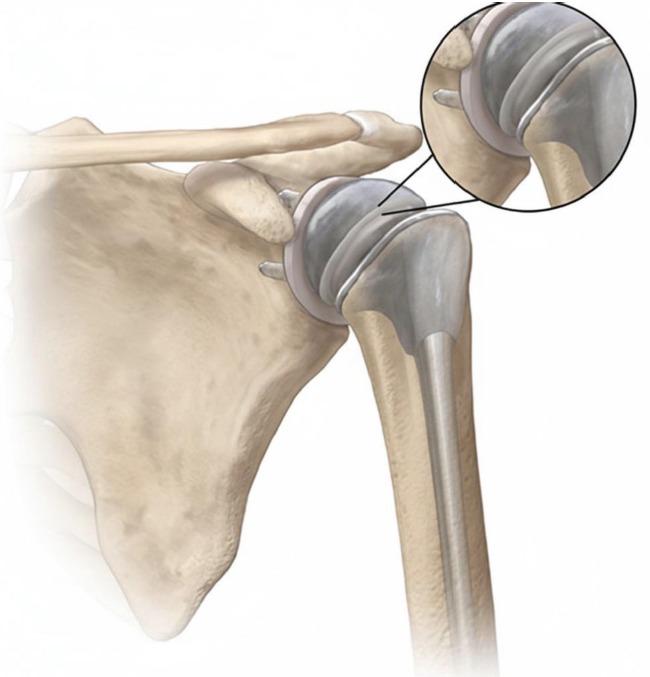
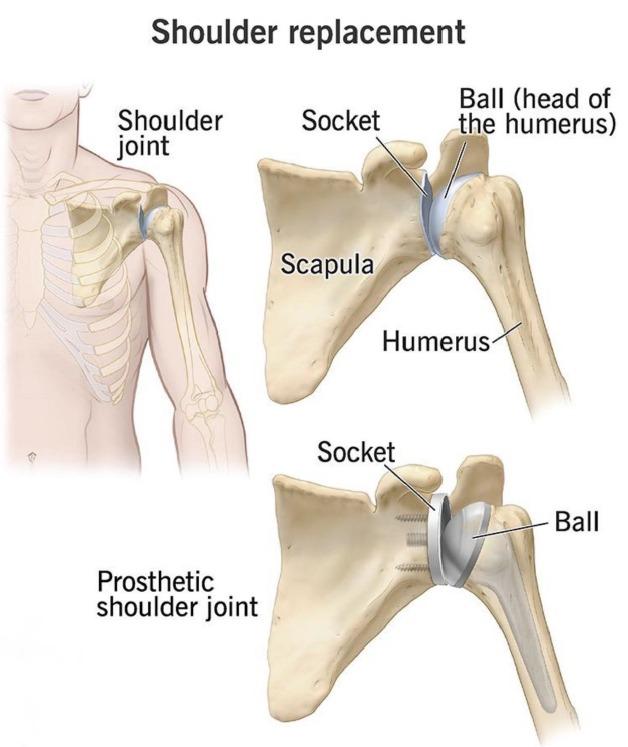
Shoulder replacement is a highly successful surgical procedure in which the worn-out, damaged components of the ball-and-socket shoulder joint are precisely replaced with artificial implants (prostheses). It is widely recommended by an orthopaedic surgeon in Bangalore for conditions such as:
The primary objective of this advanced procedure is to eradicate chronic pain, restore functional range of motion, and significantly upgrade your daily quality of life.
What Activities Can You Usually Return To?
Once your initial healing phase is complete, most patients can comfortably and safely return to a wide array of everyday activities and low-impact sports, including:
While the total recovery process is gradual, a massive percentage of patients seeking shoulder pain treatment in Bangalore report a dramatic reduction in their baseline pain levels within just a few weeks of surgery.
Activities That Require Caution After Shoulder Replacement
The ultimate goal of joint replacement is to help you reclaim your life, not restrict it. However, to prevent premature wear or mechanical failure of the artificial implant, certain high-stress activities must be approached with caution or avoided altogether:
Subjecting the artificial joint to repetitive, heavy overhead lifting can accelerate the wear of the internal polyethylene (plastic) liners. Heavy gym training, particularly heavy overhead shoulder presses, smash lifting, or maximum-weight bench presses, is generally discouraged over the long term. Light-to-moderate strength training under medical supervision, however, is highly beneficial.
Sports that expose you to the risk of violent collisions, hard falls, or sudden joint trauma can cause implant loosening, periprosthetic fractures, or joint dislocation. Avoid or limit:
Forceful pulling, sudden jerking motions such as starting a pull-start lawnmower, or highly repetitive overhead straining can overload the surrounding muscles and the implant interface, particularly during the first six months of recovery.
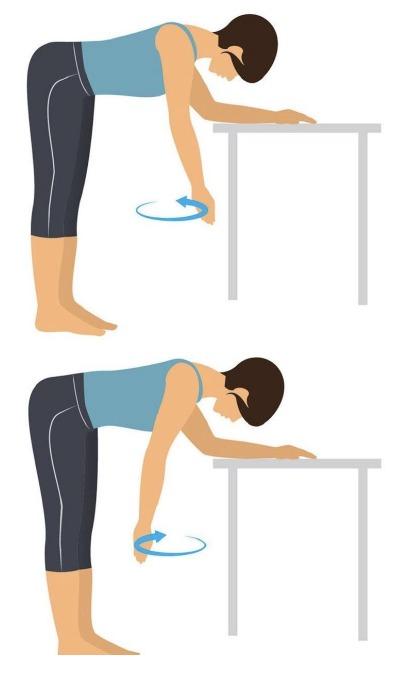
One of the most critical errors a patient can make post-surgery is ignoring their physical therapy routine. Dedicated physiotherapy in Bangalore is absolutely mandatory for:
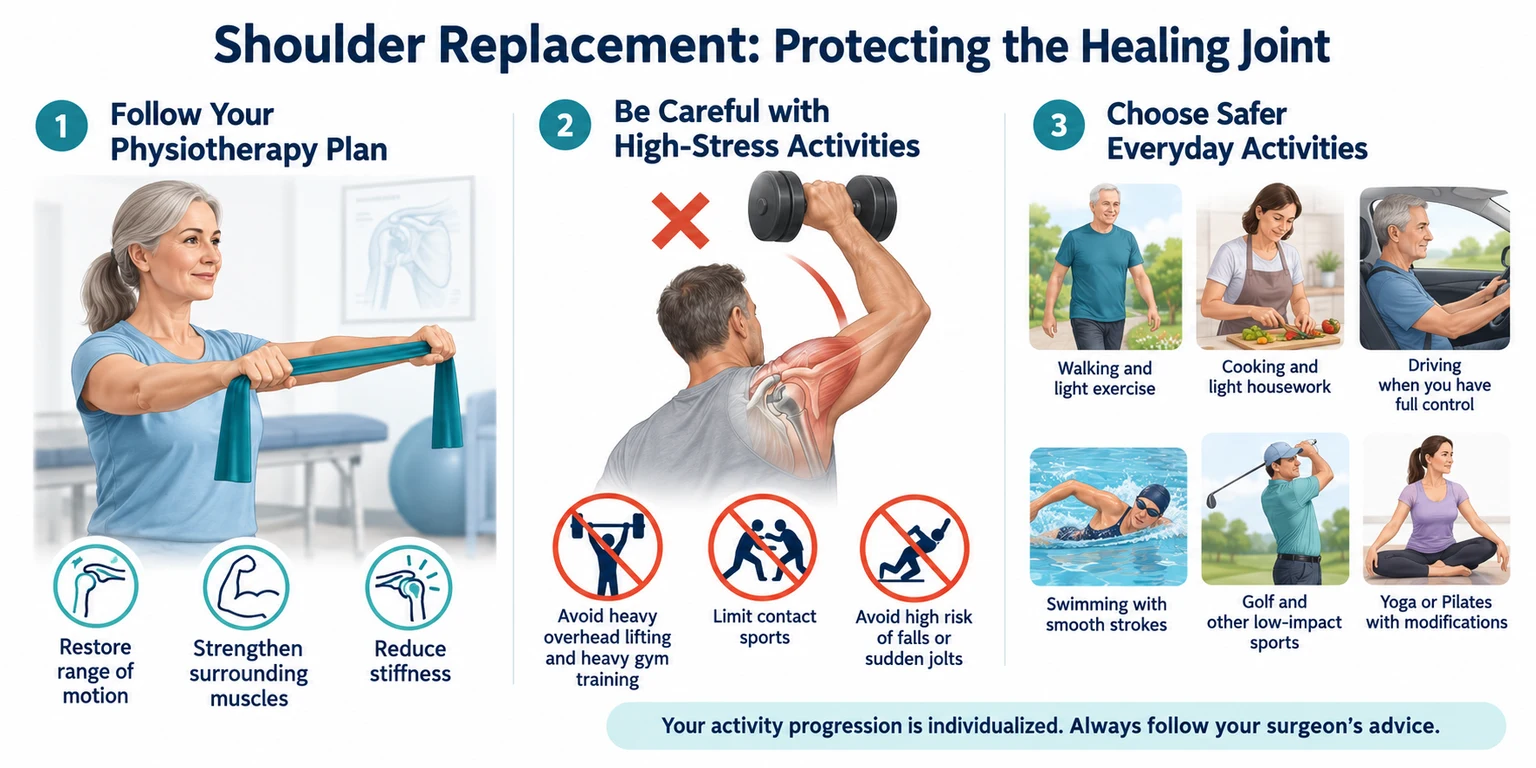
Shoulder Replacement: Protecting the Healing Joint
Shoulder Replacement: Protecting the Healing Joint. An illustrated summary of this article; individual assessment and recovery plans vary.
View full-size image (opens in a new tab)How Long Does a Shoulder Replacement Last?
Thanks to modern medical engineering and advanced bearing surfaces, a contemporary shoulder replacement can easily last 15 to 20 years or longer, provided the patient follows standard joint care precautions.
Several unique factors influence the ultimate lifespan of your shoulder implant:
Pro-Tips for a Highly Successful Recovery
Can You Sleep Comfortably After Surgery?
Yes. Sleep quality improves exponentially once the constant, grinding arthritic pain is eliminated. During the initial 4 to 6 weeks post-surgery, patients usually find the most comfort by:
As the internal tissues heal completely, you will gradually be able to return to your preferred, natural sleeping positions.
Is Shoulder Replacement Surgery Worth It?
For individuals whose lives have been shrunk by excruciating pain, disrupted sleep, and an inability to perform basic tasks like brushing their hair, shoulder replacement is frequently described as life-changing.
By partnering with a skilled shoulder specialist in Bangalore, adhering to a structured physical therapy regimen, and maintaining realistic expectations, patients routinely regain:
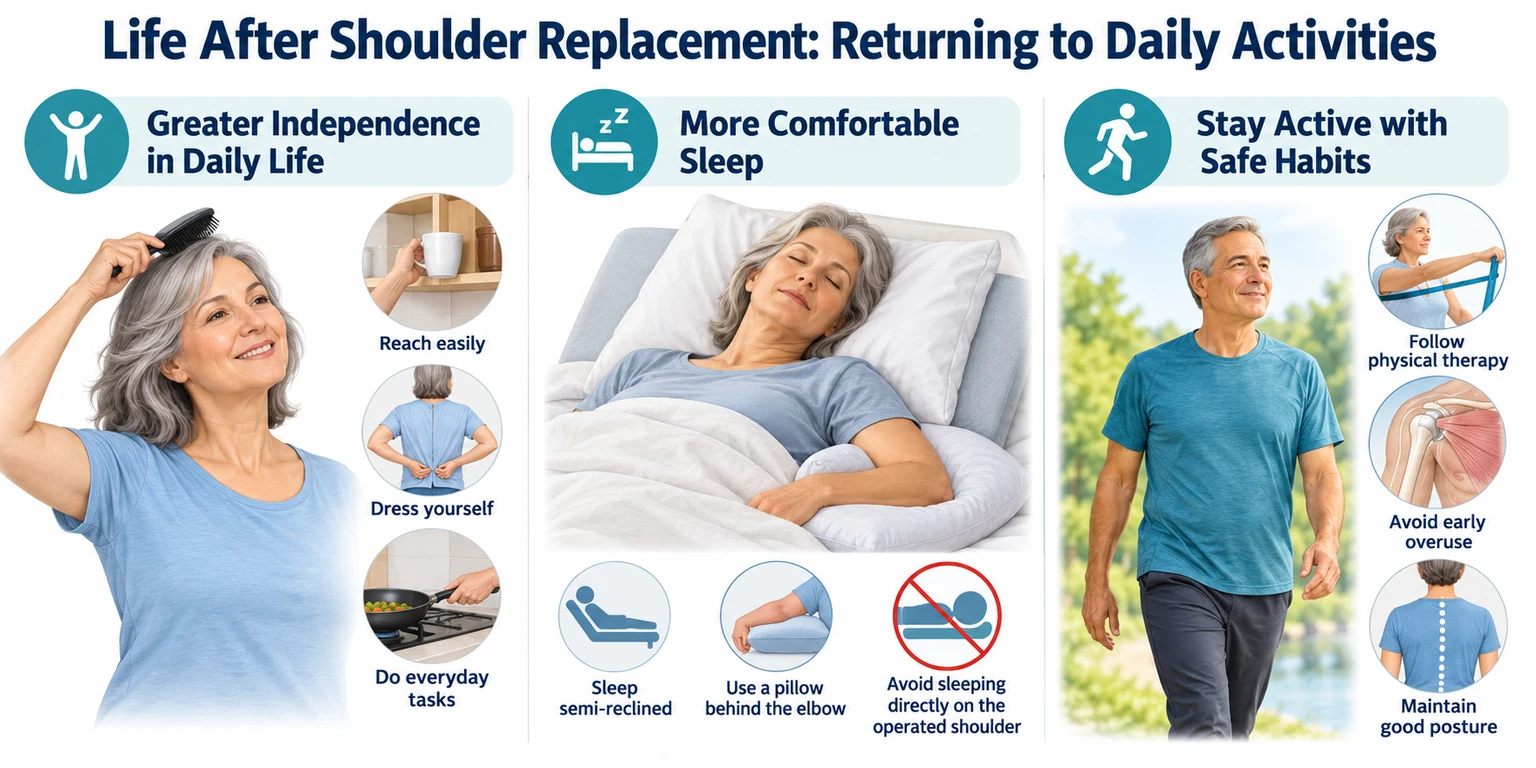
Life After Shoulder Replacement: Returning to Daily Activities
Life After Shoulder Replacement: Returning to Daily Activities. An illustrated summary of this article; individual assessment and recovery plans vary.
View full-size image (opens in a new tab)Consult the Best Shoulder Replacement Surgeon in Bangalore
If you are struggling with chronic shoulder pain, advanced joint stiffness, severe arthritis, or find yourself completely unable to lift your arm, a comprehensive evaluation can help guide you toward the right treatment.
Schedule a consultation with Dr. Pradyumna R, a premier orthopaedic specialist in Bangalore and an internationally trained shoulder & arthroscopy specialist in Bangalore. Operating at the

“Joint preservation and evidence-based conditioning are paramount. When surgical intervention is required, minimally invasive arthroscopy allows patients and competitive athletes to restore painless stability and confident motion.”
Shoulder Treatment & Recovery Journey
Shoulder Surgery Patient Journey & Specialized Care | Dr. Pradyumna R. Watch Dr. Pradyumna R explain clinical diagnosis, surgical repair techniques, and recovery milestones.
Frequently Asked Questions
A standard total shoulder replacement mimics your natural anatomy, replacing the ball with a metal ball and the socket with a plastic cup; it requires an intact, healthy rotator cuff to function. A reverse shoulder replacement switches the anatomy by placing the ball on the socket side and the cup on the arm side. This is utilized when a patient has a completely torn, non-functional rotator cuff, allowing the deltoid muscle to lift the arm instead.
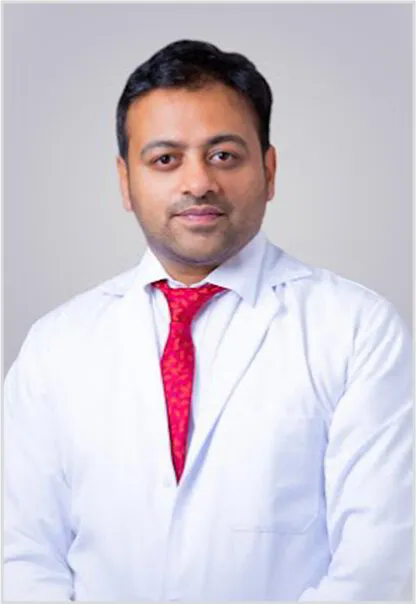
Dr. Pradyumna R
Verified SpecialistDr. Pradyumna R is a Consultant Orthopaedic Surgeon | Knee & Shoulder Surgery | Sports Medicine | Arthroscopy | Joint Replacement. He completed sub-specialty fellowship training in shoulder, elbow, and knee arthroscopy at the Technical University of Munich (TUM), Germany. He has performed over 5,000+ successful joint surgeries and practices at Bangalore Orthopaedic Clinic (JP Nagar) and Manipal Hospitals.