
Shoulder Impingement Treatment in Bangalore with expert orthopedic care, pain relief & physiotherapy for lasting recovery. Book now!
Understanding Shoulder Impingement vs Rotator Cuff Tear
Reviewed by: Dr. Pradyumna R
Shoulder pain is one of the most common complaints among people of all ages—whether you're an athlete, a working professional, or someone dealing with daily wear and tear. But not all shoulder pain is the same. Two of the most frequently confused conditions are shoulder impingement and rotator cuff tears.
Understanding the difference is crucial because the treatment approach, recovery time, and long-term outcomes can vary significantly. In this blog, we'll break down what shoulder impingement is, how it differs from a tear, and when you should seek medical help.
What is Shoulder Impingement?
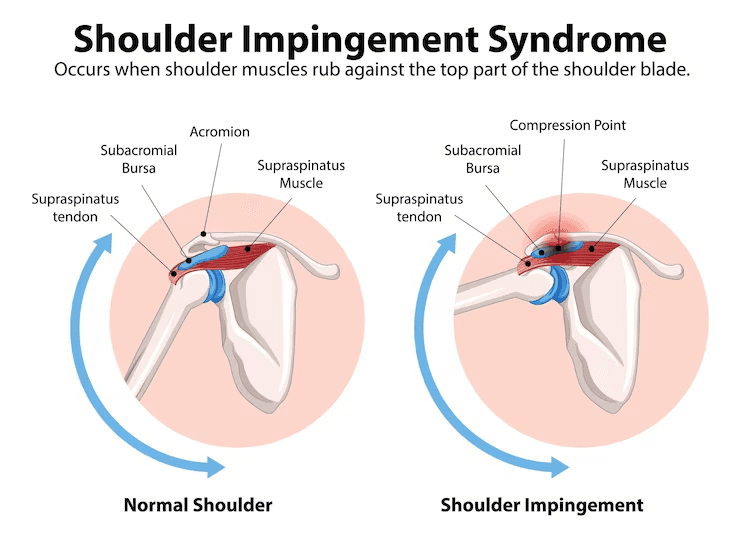
Shoulder impingement occurs when the tendons of the rotator cuff get compressed or “pinched" between the bones of the shoulder—especially during arm movements like lifting, reaching, or overhead activity. Persistent symptoms may need evaluation by a shoulder arthroscopy surgeon.
This condition typically involves the space between the acromion (top part of the shoulder blade) and the rotator cuff tendons. When this space narrows due to inflammation, bone shape, or repetitive use, the tendons get irritated.
What is a Rotator Cuff Tear?
A rotator cuff tear is a more serious condition where one or more of the rotator cuff tendons are partially or completely torn.
The rotator cuff is a group of muscles and tendons that stabilize your shoulder joint and allow smooth movement. When these tendons are damaged, it directly impacts strength and mobility.
Key Differences: Shoulder Impingement vs Tear
Understanding the symptoms can help you identify what you might be dealing with:
Shoulder Impingement:
Shoulder Impingement:
Rotator Cuff Tear:
Shoulder Impingement:
Rotator Cuff Tear:
Shoulder Impingement:
Rotator Cuff Tear:
Can Shoulder Impingement Lead to a Tear?
Yes—this is one of the most important things patients should understand.
If shoulder impingement is left untreated, the continuous friction and irritation can weaken the tendon over time. Eventually, this may lead to a rotator cuff tear.
This is why early diagnosis and treatment are critical.
When Should You See a Doctor?
You should consult an orthopaedic specialist if you notice:
Early evaluation can prevent minor conditions like shoulder impingement from progressing into more serious injuries.
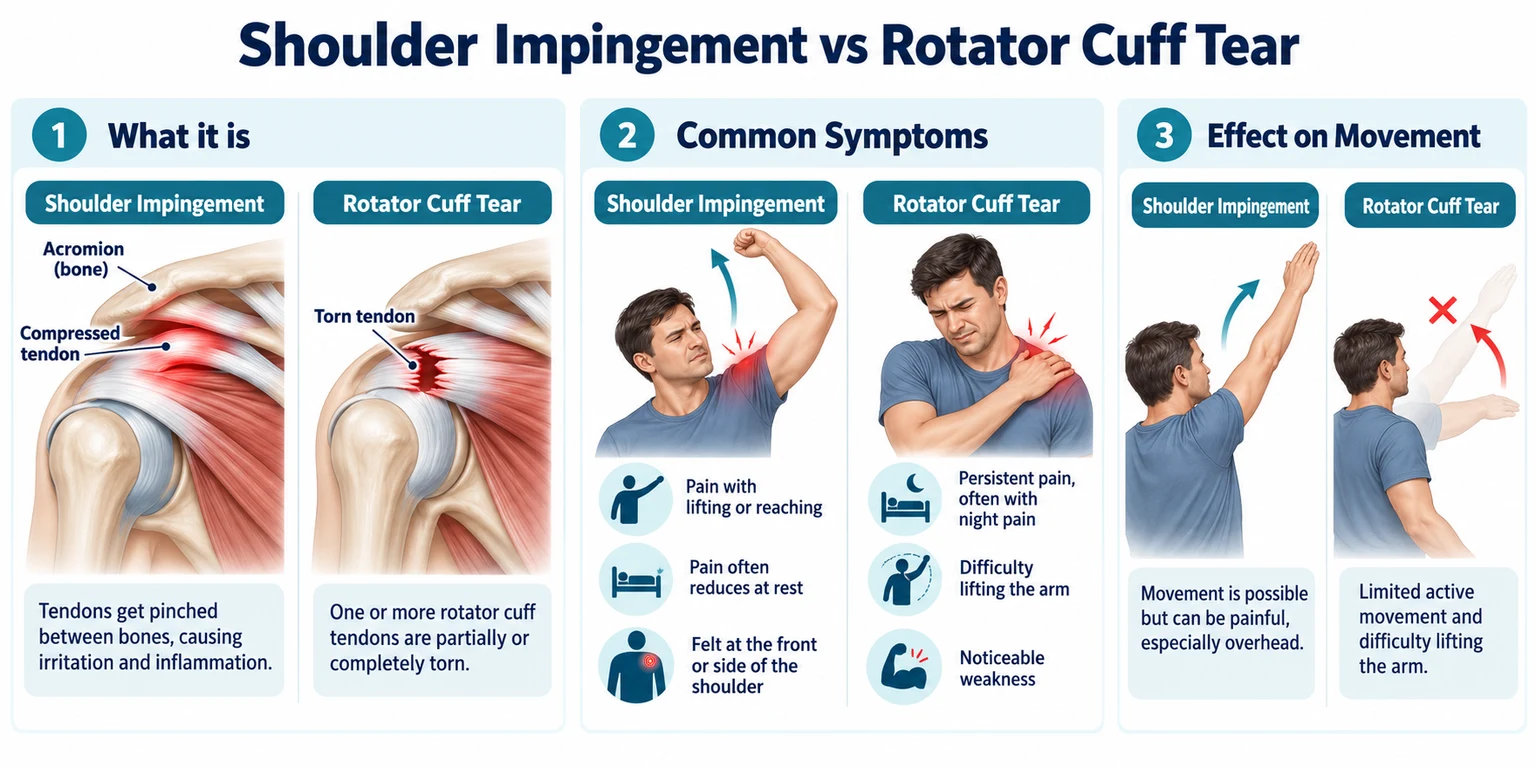
Shoulder Impingement vs Rotator Cuff Tear
Shoulder Impingement vs Rotator Cuff Tear. An illustrated summary of this article; individual assessment and recovery plans vary.
View full-size image (opens in a new tab)How Are These Conditions Diagnosed?
A specialist will typically perform:
Accurate diagnosis is essential to choose the right treatment.
Treatment Options
Most cases can be managed without surgery:
In persistent cases, arthroscopic surgery may be recommended to create more space and reduce impingement.
Treatment depends on the severity:
Recovery Timeline
Structured rehabilitation is essential
Prevention Tips
To avoid shoulder problems:
Key Takeaway
While shoulder impingement and rotator cuff tears may start with similar symptoms, they are very different conditions in terms of severity and treatment.
The key takeaway?
Don't ignore shoulder pain. Early intervention can prevent long-term damage and help you return to normal activity faster.
If you're experiencing persistent shoulder pain or suspect shoulder impingement, it's important to get the right diagnosis and treatment plan.
Dr. Pradyumna R specializes in advanced arthroscopic shoulder procedures and sports injury management.
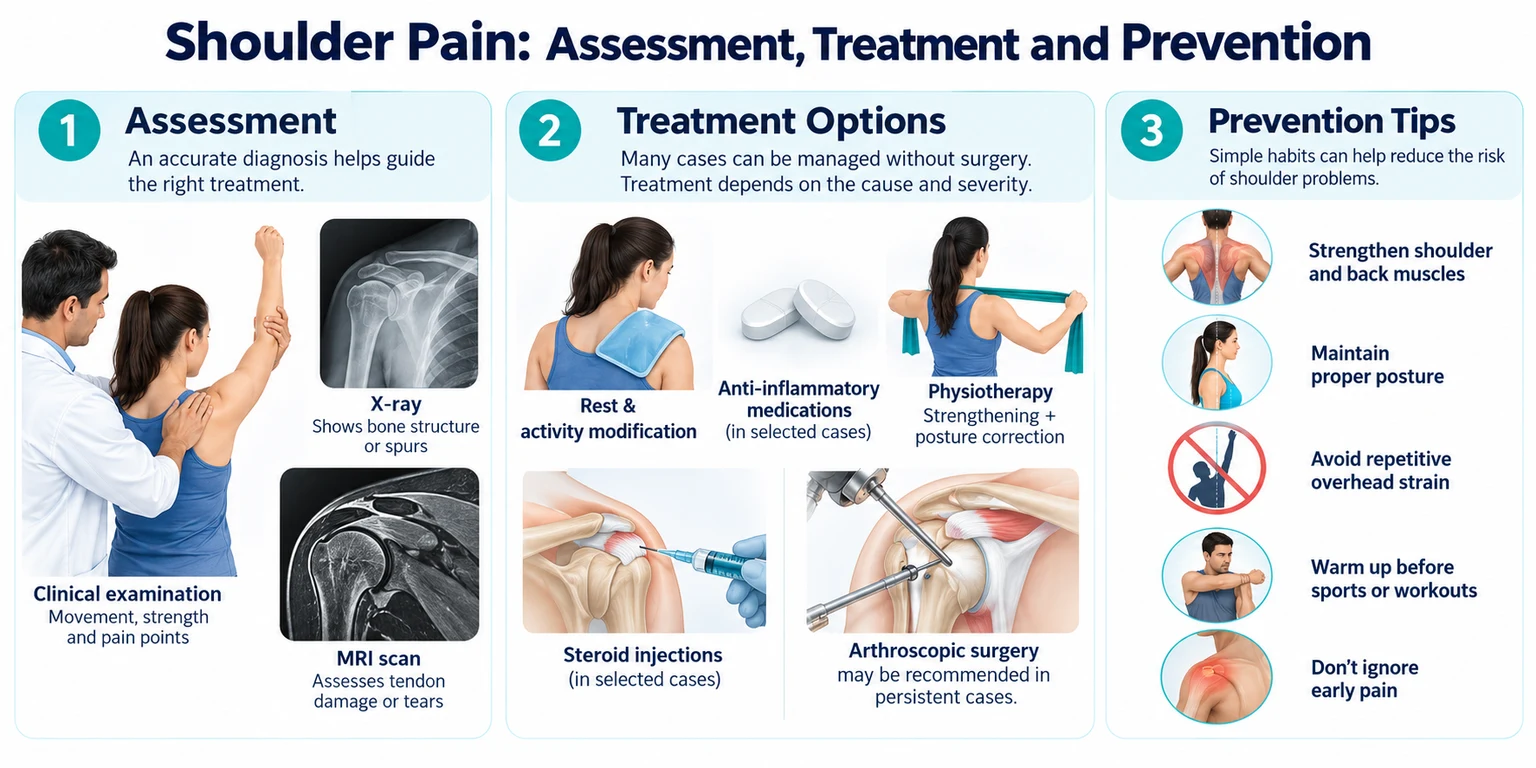
Shoulder Pain: Assessment, Treatment and Prevention
Shoulder Pain: Assessment, Treatment and Prevention. An illustrated summary of this article; individual assessment and recovery plans vary.
View full-size image (opens in a new tab)“Joint preservation and evidence-based conditioning are paramount. When surgical intervention is required, minimally invasive arthroscopy allows patients and competitive athletes to restore painless stability and confident motion.”
Rotator Cuff Tear & Shoulder Pain
Rotator Cuff Tear Diagnosis & Arthroscopic Repair | Dr. Pradyumna R. Watch Dr. Pradyumna R explain clinical diagnosis, surgical repair techniques, and recovery milestones.
Frequently Asked Questions
Shoulder impingement occurs when rotator cuff tendons are compressed or irritated under the acromion, causing pain during lifting, reaching, or overhead activity.

Dr. Pradyumna R
Verified SpecialistDr. Pradyumna R is a Consultant Orthopaedic Surgeon | Knee & Shoulder Surgery | Sports Medicine | Arthroscopy | Joint Replacement. He completed sub-specialty fellowship training in shoulder, elbow, and knee arthroscopy at the Technical University of Munich (TUM), Germany. He has performed over 5,000+ successful joint surgeries and practices at Bangalore Orthopaedic Clinic (JP Nagar) and Manipal Hospitals.