
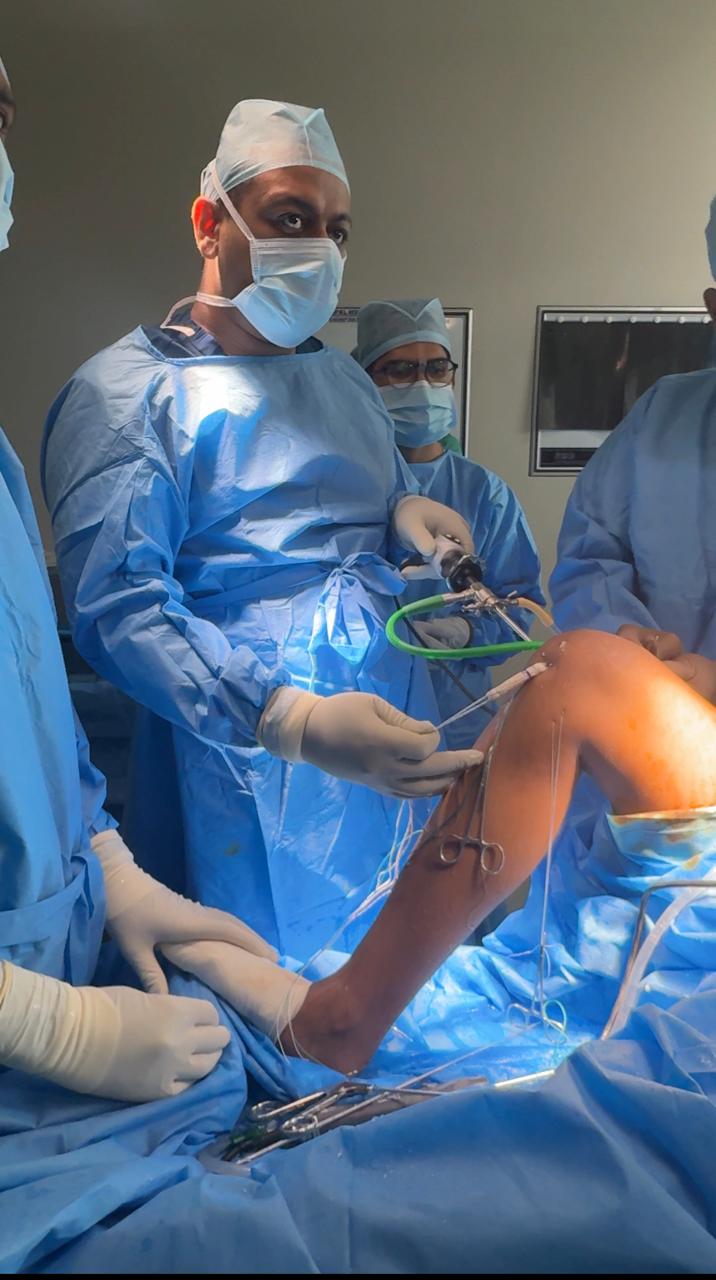
Does your knee hurt when you stand up after sitting? Learn the common causes, symptoms, diagnosis, treatment options, and when to see an orthopedic specialist in Bangalore.
Reviewed by: Dr. Pradyumna R
Quick Overview: Why Does My Knee Hurt After Sitting?
Have you ever stood up after sitting through a long meeting, a movie, or a car ride only to feel a sharp or aching pain in your knee? If so, you’re not alone. Knee pain after prolonged sitting is a common complaint among people of all ages. While it may seem like a minor inconvenience, persistent pain or stiffness can indicate an underlying knee condition that deserves attention. The good news is that many causes of knee pain after sitting can be effectively treated, especially when diagnosed early.
Why Does My Knee Hurt After Sitting?
When you remain seated for a long period, your knee stays bent, causing the joint surfaces, muscles, and surrounding soft tissues to stiffen. Reduced movement also decreases the circulation of synovial fluid—the natural lubricant inside the joint. As a result, the first few steps after standing can feel painful or stiff. If the discomfort improves after walking for a few minutes, it often points toward an underlying mechanical or degenerative condition rather than an acute injury.
1. Patellofemoral Pain Syndrome (Runner’s Knee)
One of the most common reasons for pain after sitting is patellofemoral pain syndrome, often called the “movie theatre sign.” Symptoms include:
It commonly affects young adults, runners, office workers, and individuals with muscle imbalance around the knee.
2. Knee Osteoarthritis
Osteoarthritis develops when the cartilage cushioning the knee gradually wears away. Typical symptoms include:
Early treatment can slow disease progression and improve quality of life.
3. Meniscus Tear
The meniscus acts as a shock absorber within the knee. Degenerative tears are common in middle-aged and older adults, while younger individuals may sustain tears during sports. Symptoms include:
4. Muscle Weakness and Poor Joint Mechanics
Weak quadriceps, hamstrings, gluteal muscles, or core muscles can increase stress on the knee joint. People with sedentary lifestyles often notice discomfort when rising from a chair because these muscles are not adequately supporting the knee.
5. Tendinitis or Bursitis
Inflammation of the tendons or bursae around the knee can cause pain during the first few steps after sitting, especially after repetitive activity.
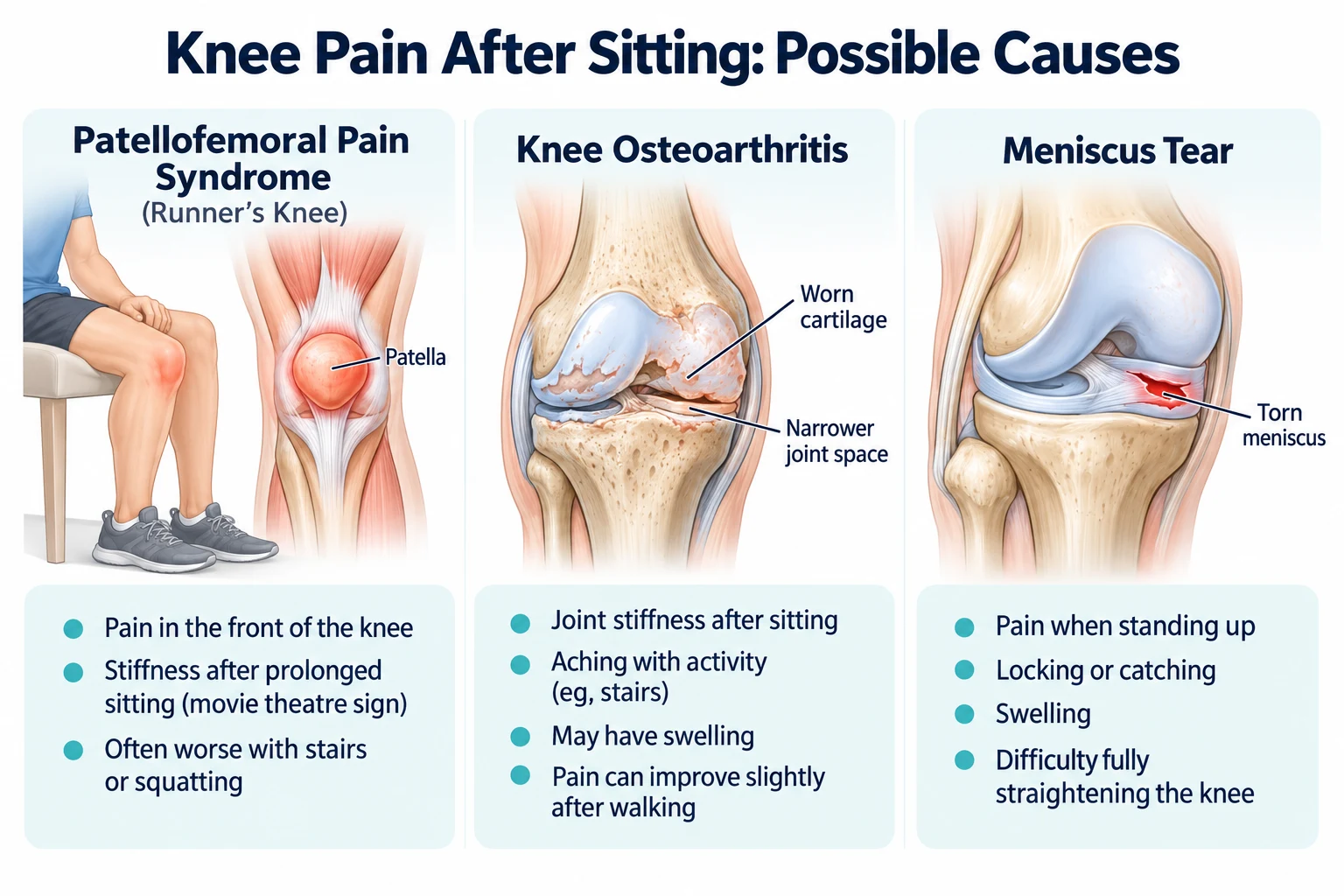
Knee Pain After Sitting: Possible Causes
Knee Pain After Sitting: Possible Causes. An illustrated summary of this article; individual assessment and recovery plans vary.
View full-size image (opens in a new tab)Is It Normal for Knee Pain to Improve After Walking?
Yes—but it shouldn’t be ignored. Many conditions, including early arthritis and patellofemoral pain syndrome, improve after a few minutes of movement because the joint warms up and becomes better lubricated. However, recurring symptoms suggest that the underlying problem still needs evaluation.
Arthritis vs Runner’s Knee: What’s the Difference?
Feature Runner’s Knee Knee Arthritis
Demographics Usually affects younger individuals More common after age 50
Pain Location Pain mainly around the kneecap Deep aching joint pain
Pain Triggers Worse with stairs, squats, prolonged sitting Worse with prolonged activity and later stages
Swelling Little or no swelling Swelling may occur
Cartilage Status Cartilage usually preserved Progressive cartilage wear
An orthopedic evaluation helps distinguish between these conditions.
Can Being Overweight Cause Knee Pain?
Yes. Every extra kilogram of body weight significantly increases the load placed on the knee during walking and stair climbing. Maintaining a healthy weight reduces stress on the joint and lowers the risk of arthritis progression.
When Should You See an Orthopedic Specialist?
Seek medical evaluation if you experience:
Early diagnosis often prevents more serious joint damage and allows simpler treatment options.
How Is Knee Pain Diagnosed?
Your orthopedic specialist will begin with a detailed history and physical examination, assessing your walking pattern, knee alignment, range of motion, ligament stability, and muscle strength. Depending on your symptoms, investigations may include:
Treatment Options
Most patients improve without surgery. Treatment may include:
Surgery may be recommended when significant meniscus tears, advanced arthritis, ligament injuries, or cartilage damage fail to respond to conservative treatment.
Don’t Ignore Persistent Knee Pain
Occasional stiffness after sitting is common, but recurring pain every time you stand is not. Whether it’s early arthritis, a meniscus injury, or patellofemoral pain syndrome, early evaluation can prevent progression and help you return to pain-free daily activities.
If knee pain is affecting your work, exercise, or quality of life, consulting an experienced orthopedic knee specialist can help identify the cause and provide the most effective treatment.
Is knee pain making it difficult to get up from a chair or enjoy your daily activities? Early diagnosis can help identify the underlying cause and prevent long-term joint damage.
Dr. Pradyumna RConsultant – Arthroscopy, Shoulder & Knee Surgery, Sports Medicine & Joint Replacement
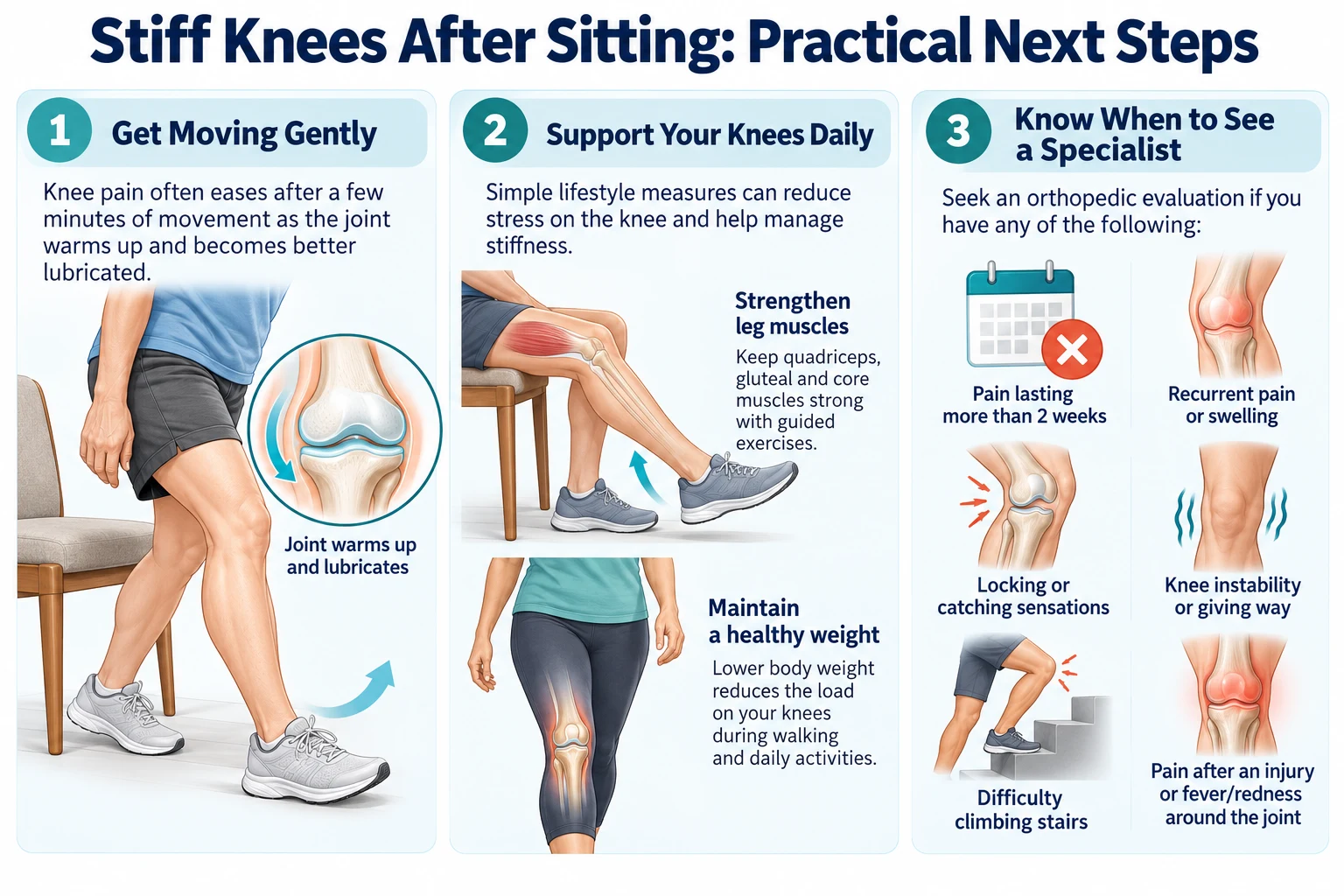
Stiff Knees After Sitting: Practical Next Steps
Stiff Knees After Sitting: Practical Next Steps. An illustrated summary of this article; individual assessment and recovery plans vary.
View full-size image (opens in a new tab)“Joint preservation and evidence-based conditioning are paramount. When surgical intervention is required, minimally invasive arthroscopy allows patients and competitive athletes to restore painless stability and confident motion.”
Robotic Total Knee Replacement Guide
Advanced Robotic Knee Replacement Options & Recovery | Dr. Pradyumna R. Watch Dr. Pradyumna R explain clinical diagnosis, surgical repair techniques, and recovery milestones.
Frequently Asked Questions
Prolonged sitting causes joint stiffness and reduced lubrication, making underlying conditions such as arthritis or patellofemoral pain more noticeable when standing.

Dr. Pradyumna R
Verified SpecialistDr. Pradyumna R is a Consultant Orthopaedic Surgeon | Knee & Shoulder Surgery | Sports Medicine | Arthroscopy | Joint Replacement. He completed sub-specialty fellowship training in shoulder, elbow, and knee arthroscopy at the Technical University of Munich (TUM), Germany. He has performed over 5,000+ successful joint surgeries and practices at Bangalore Orthopaedic Clinic (JP Nagar) and Manipal Hospitals.