
Don't ignore knee pain or swelling. Discover the early warning signs of joint damage and consult Dr. Pradyumna R in Bangalore for expert care.
Reviewed by: Dr. Pradyumna R
Knee pain is one of the most common musculoskeletal complaints affecting people of all ages. Whether you’re a young athlete, a working professional, or an older adult, knee discomfort can significantly impact your daily activities and quality of life. While occasional soreness after strenuous activity may not be a cause for concern, persistent or recurring knee pain should never be ignored.
Many serious knee conditions begin with subtle symptoms that worsen over time if left untreated. Recognizing these early warning signs and seeking timely medical attention can help prevent long-term joint damage and improve treatment outcomes.
1. Persistent Knee Pain Lasting More Than a Few Weeks
It is normal to experience temporary knee soreness after intense physical activity or minor injuries. However, pain that persists for more than two to three weeks despite rest, ice, and activity modification may indicate an underlying problem such as:
Ignoring persistent pain can allow these conditions to progress, potentially leading to more complex treatment requirements in the future.
2. Swelling Around the Knee
Swelling is often the body’s response to inflammation or injury. If your knee appears swollen, feels tight, or becomes difficult to bend fully, it may signal:
Sudden swelling occurring within a few hours after an injury should be evaluated promptly, as it may indicate bleeding inside the joint or a significant ligament injury.
3. Clicking, Locking, or Catching Sensations
Many people occasionally hear harmless clicking sounds from their knees. However, frequent clicking accompanied by pain, locking, or a sensation that the knee gets “stuck” should not be ignored. These symptoms may suggest:
Mechanical symptoms often indicate structural problems within the knee that may worsen without appropriate treatment.
4. Instability or the Knee Giving Way
If your knee feels unstable or suddenly buckles while walking, climbing stairs, or changing direction, it may indicate ligament insufficiency. Common causes include:
Instability not only affects confidence during movement but also increases the risk of further injury to cartilage and surrounding structures.
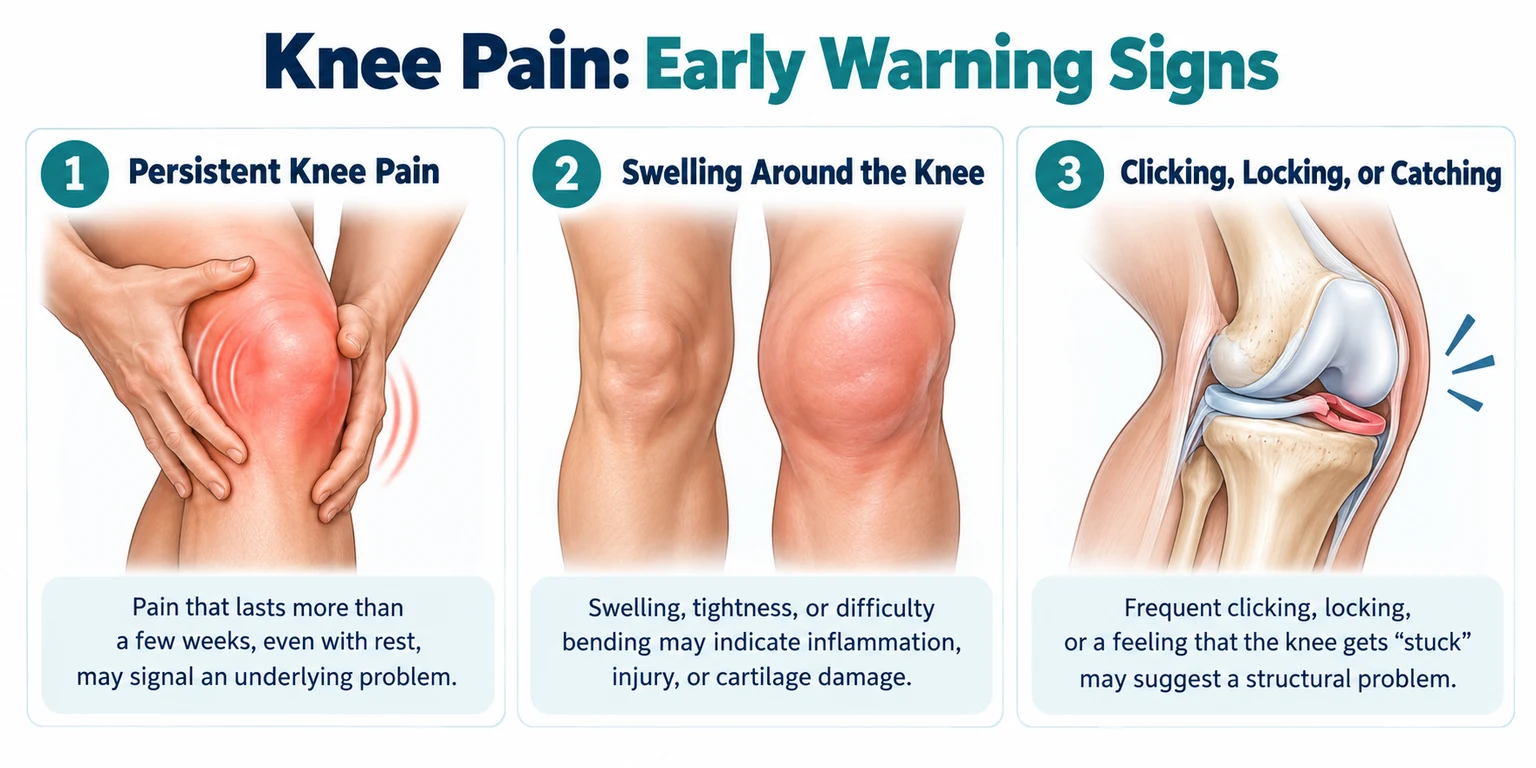
Knee Pain: Early Warning Signs
Knee Pain: Early Warning Signs. An illustrated summary of this article; individual assessment and recovery plans vary.
View full-size image (opens in a new tab)5. Pain While Climbing Stairs or Squatting
Pain experienced specifically during activities such as climbing stairs, squatting, kneeling, or getting up from a chair often points toward problems involving the kneecap and surrounding cartilage. Potential causes include:
Early intervention through physiotherapy and activity modification can often prevent progression to chronic pain.
6. Morning Stiffness or Reduced Range of Motion
Difficulty straightening or bending the knee fully, particularly after waking up or sitting for prolonged periods, may be an early sign of:
Many patients mistakenly attribute stiffness to aging and delay seeking care until symptoms become severe. Early evaluation can help preserve joint function and mobility.
7. Pain During Sports or Exercise
Athletes and active individuals frequently push through discomfort, assuming it will resolve on its own. However, pain during running, jumping, pivoting, or sports-specific movements may indicate:
Addressing these issues early often allows for quicker recovery and safer return to sports.
When Should You See an Orthopaedic Specialist?
You should seek professional evaluation if you experience:
Early diagnosis allows for more treatment options, many of which can be managed non-surgically through physiotherapy, medications, activity modification, or minimally invasive arthroscopic procedures.
Expert Care for Knee Problems in Bangalore
Timely assessment by a knee specialist can identify the root cause of your symptoms and prevent long-term complications. Modern diagnostic tools, advanced rehabilitation protocols, and minimally invasive arthroscopic techniques have significantly improved outcomes for patients with knee injuries and degenerative conditions.
Dr. Pradyumna R is a Consultant Orthopaedic Surgeon specializing in Sports Medicine, Arthroscopy, Knee Ligament Reconstruction, Meniscus Preservation, Cartilage Restoration, Shoulder Surgery, and Joint Preservation procedures. He provides evidence-based treatment tailored to each patient’s lifestyle, activity level, and long-term goals.
Appointments: +91 91130 25188Location: [
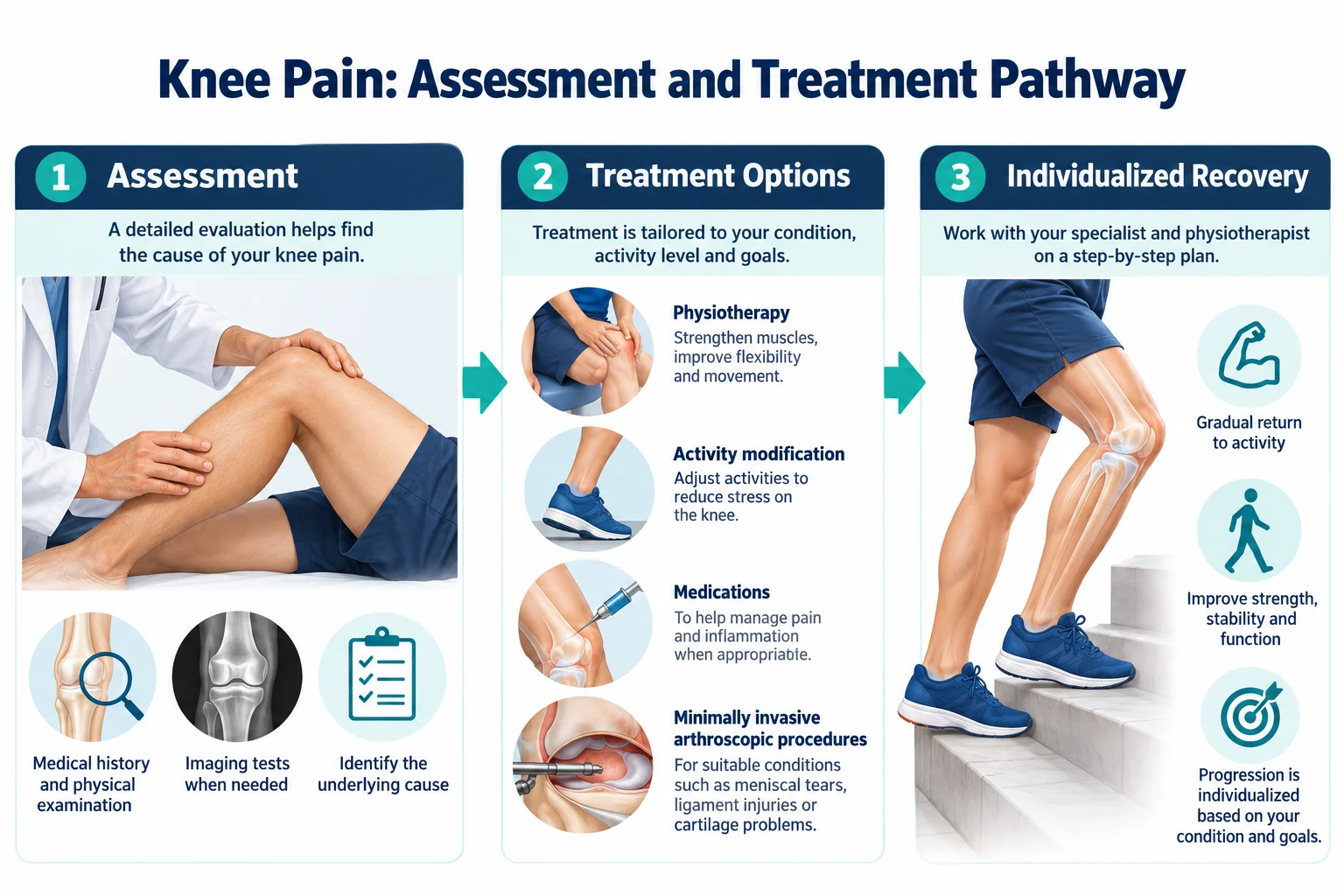
Knee Pain: Assessment and Treatment Pathway
Knee Pain: Assessment and Treatment Pathway. An illustrated summary of this article; individual assessment and recovery plans vary.
View full-size image (opens in a new tab)“Joint preservation and evidence-based conditioning are paramount. When surgical intervention is required, minimally invasive arthroscopy allows patients and competitive athletes to restore painless stability and confident motion.”
Robotic Total Knee Replacement Guide
Advanced Robotic Knee Replacement Options & Recovery | Dr. Pradyumna R. Watch Dr. Pradyumna R explain clinical diagnosis, surgical repair techniques, and recovery milestones.
Frequently Asked Questions
You should see a specialist if your knee pain lasts longer than two weeks, is accompanied by sudden swelling, causes the knee to buckle, or limits your ability to walk or climb stairs.

Dr. Pradyumna R
Verified SpecialistDr. Pradyumna R is a Consultant Orthopaedic Surgeon | Knee & Shoulder Surgery | Sports Medicine | Arthroscopy | Joint Replacement. He completed sub-specialty fellowship training in shoulder, elbow, and knee arthroscopy at the Technical University of Munich (TUM), Germany. He has performed over 5,000+ successful joint surgeries and practices at Bangalore Orthopaedic Clinic (JP Nagar) and Manipal Hospitals.