
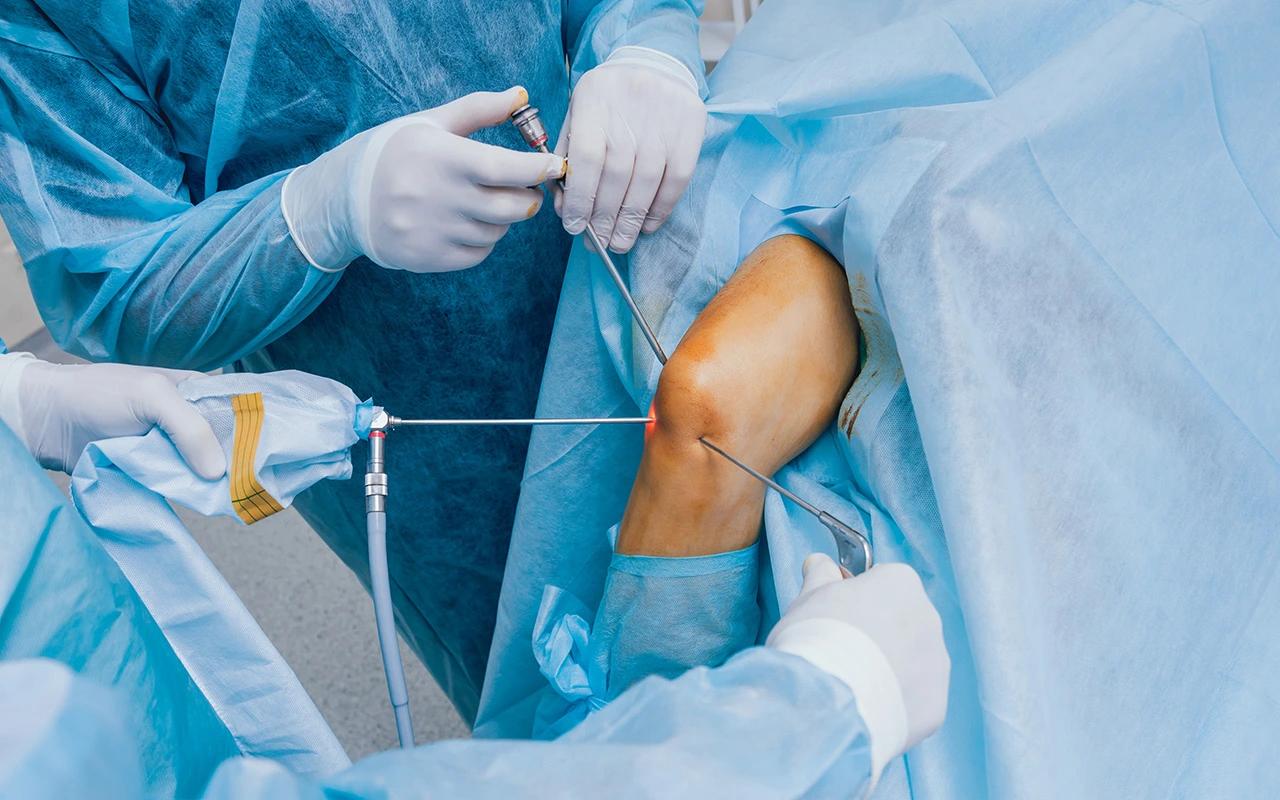
What you should know about knee arthroscopy — procedure, recovery, and when it's recommended — from Dr. Pradyumna R, Orthopaedic Surgeon in Bangalore.
Knee arthroscopy is an advanced, minimally invasive surgical technique used to inspect, diagnose, and treat a wide variety of knee joint conditions. Using miniature instruments and a pencil-sized camera known as an arthroscope, an orthopaedic surgeon can visualize the joint with high-definition precision without making large open incisions.
What Is Knee Arthroscopy?
In Knee Arthroscopy, your surgeon makes small keyhole incisions and inserts an arthroscope to look directly inside the joint cavity. This enables precise diagnosis and immediate surgical repair. This technique helps treat various knee problems like misaligned patella (kneecap), torn meniscus, ACL tears, PCL injuries, cartilage damage, synovial inflammation, and loose bodies.
Who Performs Knee Arthroscopy?
An experienced Orthopaedic surgeon with specialized fellowship training in Arthroscopy and Sports Medicine performs this procedure. Choosing a surgeon with high procedural volume ensures superior precision, minimal tissue disruption, and optimal functional recovery.
When Should You Consider Knee Arthroscopy?
Your orthopaedic surgeon may recommend arthroscopy if you experience persistent knee pain, joint locking, clicking, swelling, or instability that does not respond to non-surgical treatments such as rest, medications, or physiotherapy.
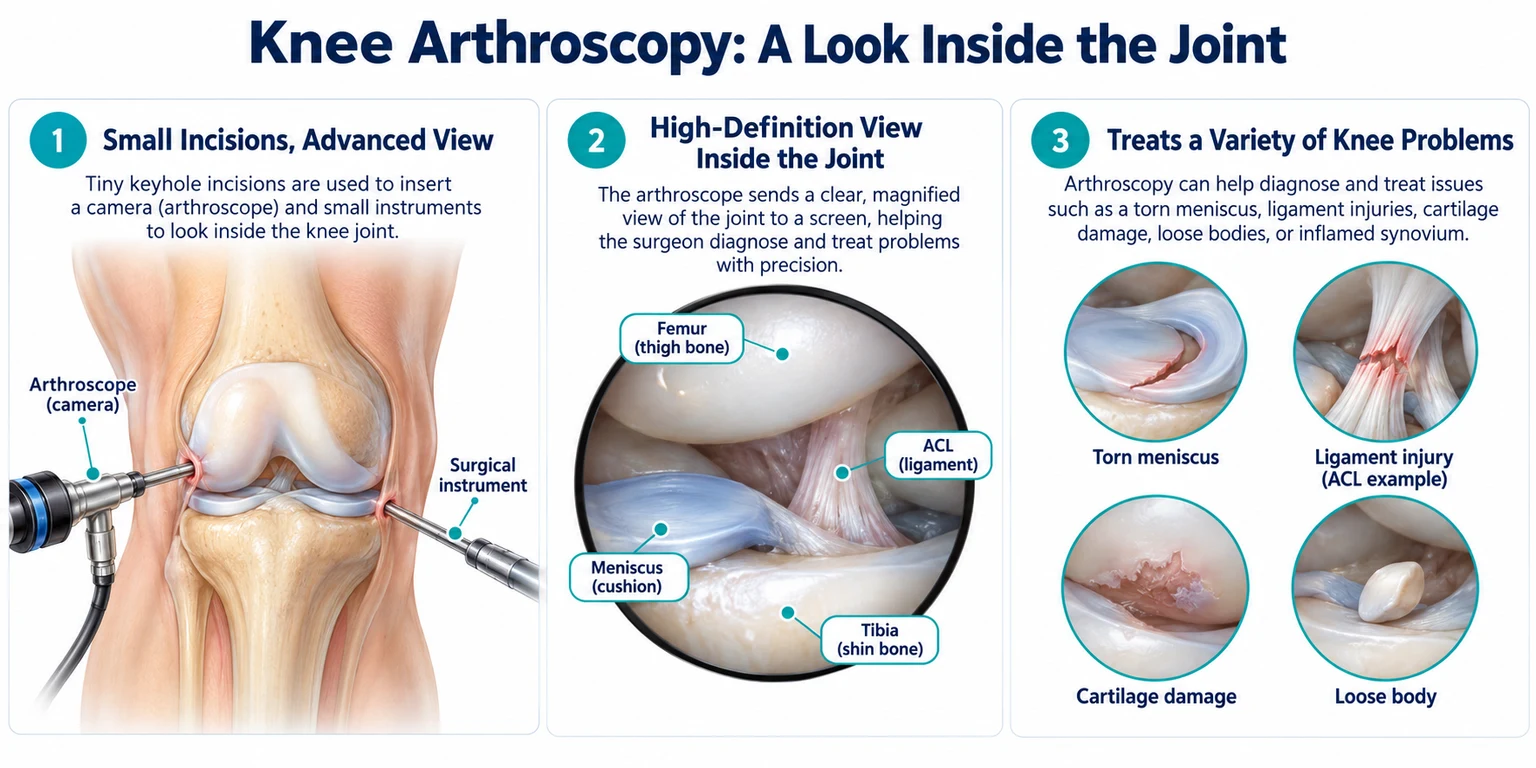
Knee Arthroscopy: A Look Inside the Joint
Knee Arthroscopy: A Look Inside the Joint. An illustrated summary of this article; individual assessment and recovery plans vary.
View full-size image (opens in a new tab)Conditions Treated Through Arthroscopy
Arthroscopic procedures are highly effective for treating:
Pre-Surgical Preparation
Your orthopaedic surgeon will evaluate your joint health, medical history, and imaging (X-rays or MRI). You will receive instructions on fasting prior to anesthesia and discontinuing blood-thinning medications if necessary.
During and After the Procedure
The procedure typically takes 30 to 60 minutes under regional or general anesthesia. Patients usually return home the same day. Post-operative care includes ice application, elevation, pain management, and structured physiotherapy rehabilitation to regain full strength and range of motion.
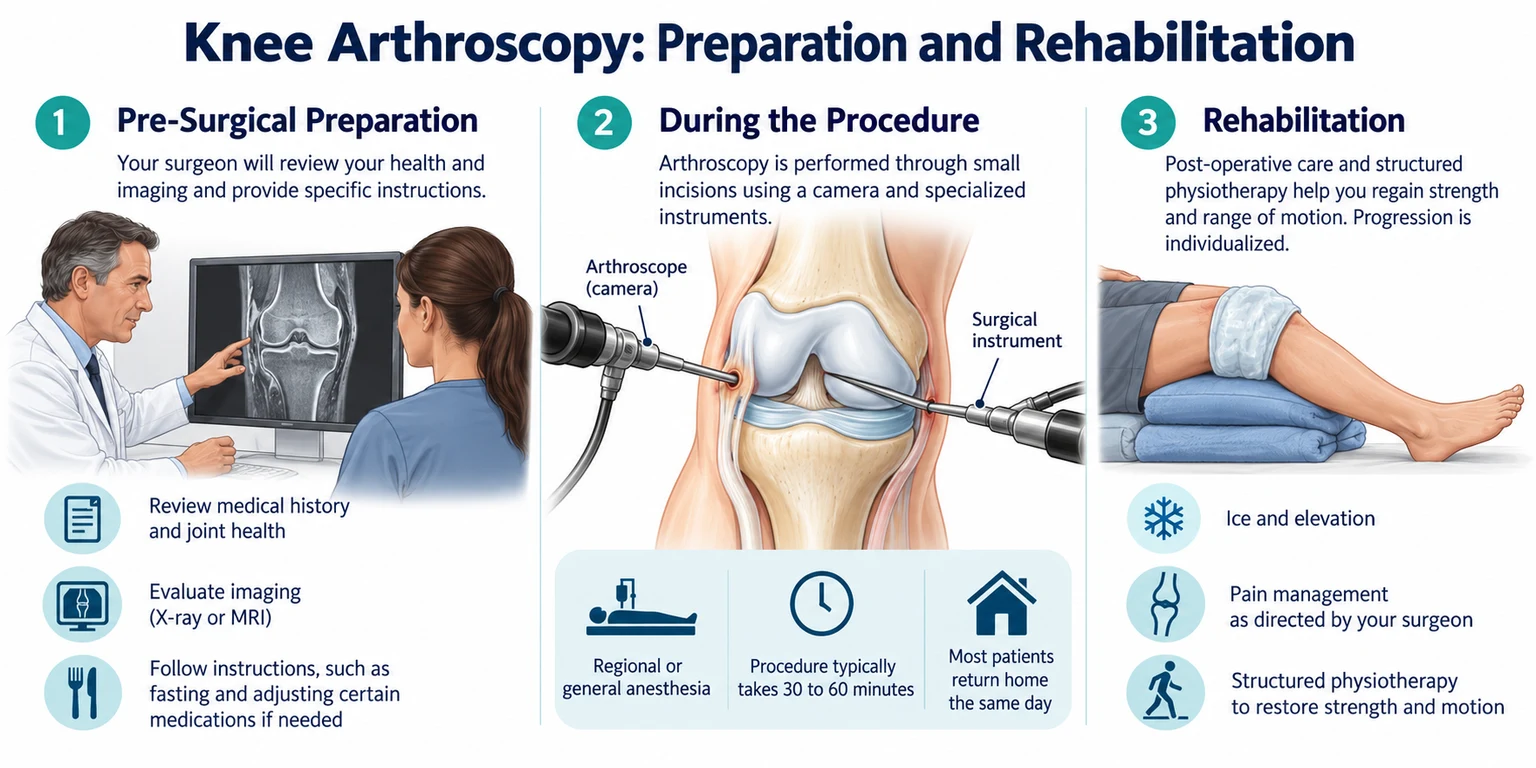
Knee Arthroscopy: Preparation and Rehabilitation
Knee Arthroscopy: Preparation and Rehabilitation. An illustrated summary of this article; individual assessment and recovery plans vary.
View full-size image (opens in a new tab)“Joint preservation and evidence-based conditioning are paramount. When surgical intervention is required, minimally invasive arthroscopy allows patients and competitive athletes to restore painless stability and confident motion.”
Meniscus Tear Symptoms & Surgical Repair
Keyhole Meniscal Surgery & Joint Preservation | Dr. Pradyumna R. Watch Dr. Pradyumna R explain clinical diagnosis, surgical repair techniques, and recovery milestones.
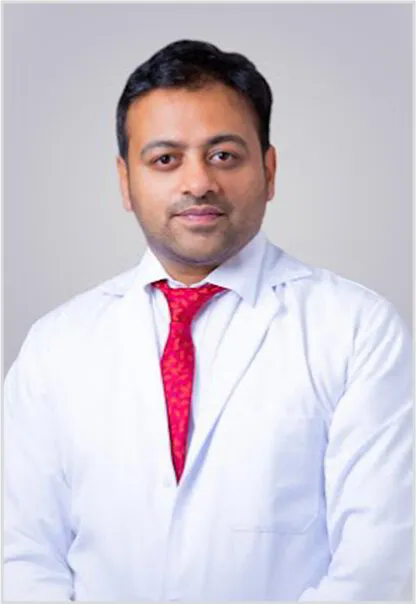
Dr. Pradyumna R
Verified SpecialistDr. Pradyumna R is a Consultant Orthopaedic Surgeon | Knee & Shoulder Surgery | Sports Medicine | Arthroscopy | Joint Replacement. He completed sub-specialty fellowship training in shoulder, elbow, and knee arthroscopy at the Technical University of Munich (TUM), Germany. He has performed over 5,000+ successful joint surgeries and practices at Bangalore Orthopaedic Clinic (JP Nagar) and Manipal Hospitals.