Learn why an ACL graft can re-tear after reconstruction, common causes, symptoms, prevention tips and ACL revision surgery options in Bangalore with Dr. Pradyumna R.
Reviewed by: Dr. Pradyumna R
An ACL reconstruction is designed to restore knee stability and help patients return to an active lifestyle. However, in some cases, the reconstructed ligament or ACL graft can become stretched, damaged or torn again. An ACL re-tear can be particularly frustrating for athletes and active individuals who have already completed surgery and months of rehabilitation. Understanding why an ACL graft fails, identifying the cause of failure and planning the right treatment are important before considering another reconstruction. For patients looking for ACL re-tear treatment in Bangalore, evaluation by an orthopaedic surgeon experienced in sports injuries and revision ACL procedures can help determine whether rehabilitation alone is sufficient or ACL revision surgery in Bangalore is required.
What Is an ACL Re-Tear?
During ACL reconstruction, the damaged anterior cruciate ligament-tear-difference) is replaced with a graft, usually obtained from the patient's own hamstring, patellar tendon or quadriceps tendon, or occasionally from donor tissue. Over time, the graft incorporates into the knee and functions as the new ACL. An ACL re-tear occurs when this reconstructed ligament is injured again. In some patients, the graft may not completely rupture but can stretch or become functionally insufficient, resulting in recurrent knee instability. This is often referred to more broadly as ACL graft failure.
Why Does an ACL Graft Fail?
There isn't always one single reason. ACL graft failure may result from a combination of a new injury, surgical factors, rehabilitation issues and the patient's individual anatomy.
1. A New Sports Injury
A second twisting or pivoting injury is one of the most common reasons for ACL re-tear. Sports involving sudden direction changes, jumping and landing—such as football, basketball, badminton and other pivoting sports—can place considerable stress on the reconstructed ACL. A direct collision or awkward landing can also damage an otherwise well-healed graft.
2. Returning to Sport Too Early
Feeling better does not necessarily mean the reconstructed ACL is ready for unrestricted sport. The graft continues to undergo biological healing and remodelling for many months after surgery. Returning to high-demand sports before adequate strength, balance, coordination and neuromuscular control have been restored can increase the risk of another injury. Return-to-sport decisions should therefore be based on objective functional testing and recovery rather than time alone.
3. Inadequate Rehabilitation
Successful ACL reconstruction involves much more than the surgery itself. Targeted rehabilitation is essential for restoring:
Incomplete rehabilitation may leave the knee vulnerable when the patient returns to demanding activities.
4. Muscle Weakness and Poor Movement Control
Weak quadriceps, hamstrings, hip muscles or poor neuromuscular control can affect how forces are distributed through the knee. The hamstrings are particularly important because they help control forward movement of the shin bone and work dynamically with the ACL. Strengthening these muscle groups is therefore an important part of ACL re-injury prevention in Bangalore and elsewhere.
5. Technical Factors From the First Surgery
Sometimes ACL graft failure is related to technical issues from the initial reconstruction. These may include:
Tunnel position is particularly important because the reconstructed ACL needs to reproduce the natural anatomy and biomechanics of the original ligament. Revision surgery requires careful assessment of the previous reconstruction before a new graft is placed.
6. Unrecognised Meniscus or Other Ligament Injuries
The ACL does not work independently. Damage to the meniscus, collateral ligaments (such as the MCL) or other stabilising structures can increase stress on an ACL graft. In some patients with recurrent instability, these associated problems need to be addressed during revision surgery. For a comparison of symptoms, read our guide on ACL vs. Meniscus tear differences.
7. Individual Knee Anatomy
Certain anatomical factors can contribute to repeated ACL injuries. For example, some patients may have increased posterior tibial slope or other structural characteristics that increase forces acting on the ACL. An ACL reconstruction specialist in Bangalore may therefore evaluate the overall alignment and anatomy of the knee, particularly in patients who have experienced repeated graft failures.
How Do You Know If You Have Re-Torn Your ACL?
Symptoms can resemble those experienced during the original ACL injury. Common warning signs include:
Not every episode of knee pain after ACL surgery means the graft has failed. Meniscus injuries, cartilage problems, patellar dislocation, and other knee conditions can produce similar symptoms. A clinical examination and imaging are therefore important.
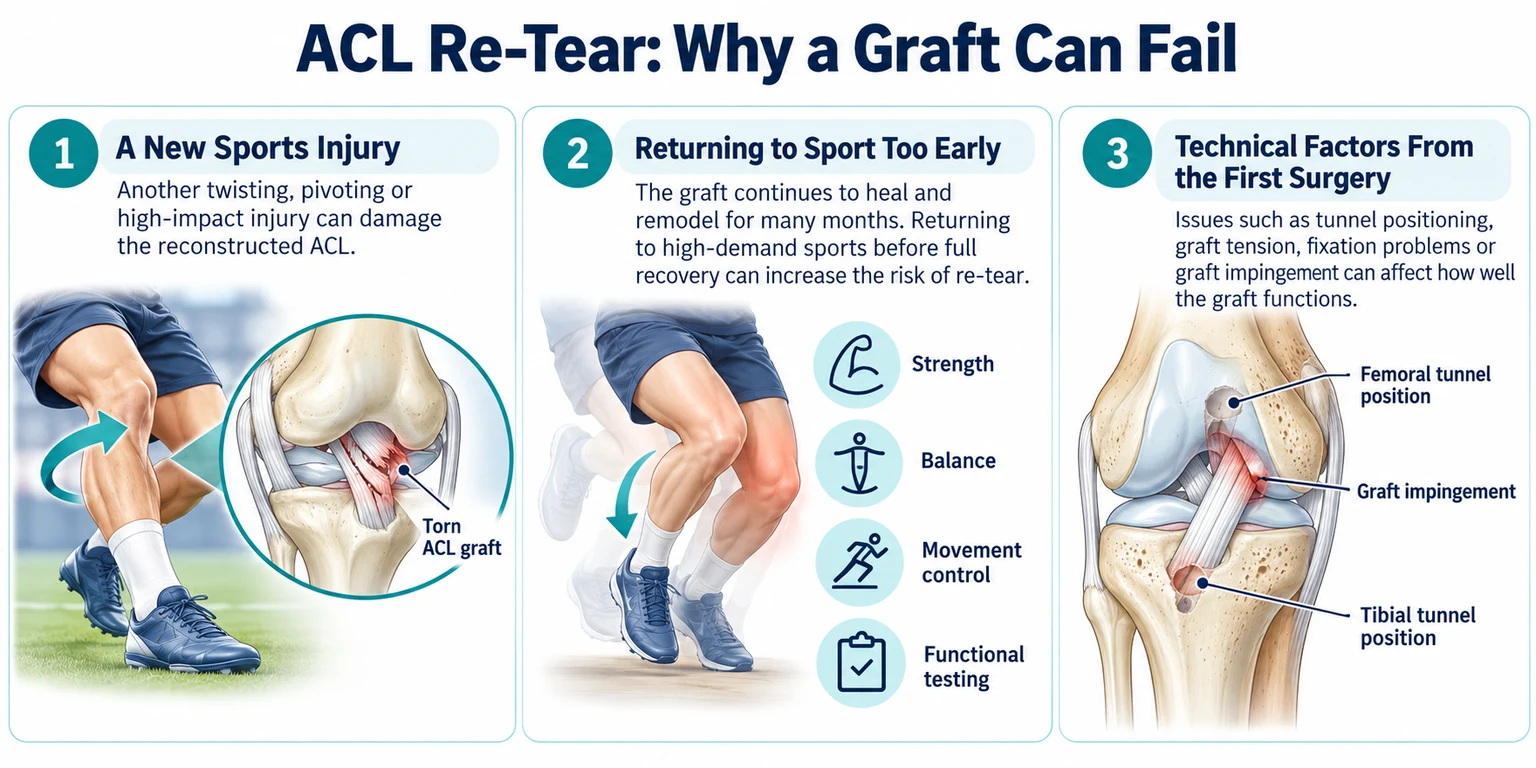
ACL Re-Tear: Why a Graft Can Fail
ACL Re-Tear: Why a Graft Can Fail. An illustrated summary of this article; individual assessment and recovery plans vary.
View full-size image (opens in a new tab)How Is an ACL Re-Tear Diagnosed?
Diagnosis usually begins with a detailed history of the original ACL surgery, rehabilitation and the circumstances surrounding the new symptoms. The orthopaedic surgeon will examine knee stability and may perform tests such as the Lachman test and pivot-shift test.
What Is ACL Revision Surgery?
ACL revision surgery is a repeat ACL reconstruction performed when a previous ACL graft has failed and the patient continues to experience clinically significant instability. Revision surgery can be more complex than primary ACL reconstruction because the surgeon needs to understand exactly why the first reconstruction failed. Factors that may need to be considered include:
In some patients, revision ACL reconstruction can be performed as a single-stage procedure. In others, particularly when previous tunnels are significantly enlarged or poorly positioned, a staged procedure may be considered. The old tunnels may first need bone grafting before a new ACL reconstruction is performed later. This is why choosing a surgeon experienced in revision and complex sports-knee procedures is important when considering ACL revision surgery in Bangalore.
Graft Options for Revision ACL Surgery
The graft selected for revision surgery depends on what was used during the first procedure, the patient's age, activity level, anatomy and available graft tissue. Options may include:
There is no single graft that is best for every revision ACL patient. The choice should be individualised after evaluating the previous surgery and the patient's sporting requirements.
How Can You Prevent an ACL Re-Tear?
Although no strategy can completely eliminate the possibility of another injury, several measures can reduce risk.
Complete Your Rehabilitation
Do not stop physiotherapy simply because everyday activities feel comfortable. Later stages of ACL rehabilitation are particularly important for athletes.
Rebuild Strength Symmetrically
Both legs should be assessed for strength deficits, particularly the quadriceps, hamstrings, gluteal muscles and calf muscles.
Work on Landing and Cutting Technique
Neuromuscular training can help athletes learn safer movement patterns during jumping, landing, deceleration and rapid changes of direction.
Use Objective Return-to-Sport Testing
Return to sport should not be based solely on the number of months since surgery. Strength testing, hop tests, movement quality, knee stability and psychological readiness may all form part of the decision.
Gradually Increase Sports Exposure
Going directly from rehabilitation exercises to full competitive sport can overload the knee. Training intensity, cutting movements, contact drills and competition should be introduced progressively.
Continue Injury-Prevention Exercises
ACL prevention exercises should continue even after the athlete has returned to sport. Strength, balance, agility and landing drills can remain part of regular training.
ACL Revision Surgery Cost in Bangalore
The ACL revision surgery cost in Bangalore varies depending on several factors, including:
An accurate cost estimate can generally be provided only after clinical examination and review of previous operative records and imaging.
A second ACL injury does not automatically mean another surgery is required. The first step is identifying why the ACL graft failed and whether the knee remains functionally unstable. Dr. Pradyumna R evaluates ACL graft failures, recurrent sports injuries and complex knee instability, with treatment planned according to the patient's knee anatomy, previous reconstruction, activity level and sporting goals.
If you have undergone ACL reconstruction and are experiencing repeated knee giving-way, swelling or instability, a specialist assessment can help determine whether physiotherapy, activity modification or ACL revision surgery in Bangalore is appropriate.
Dr. Pradyumna R Orthopaedic Surgeon – Sports Medicine, Arthroscopy & Shoulder/Knee Surgery
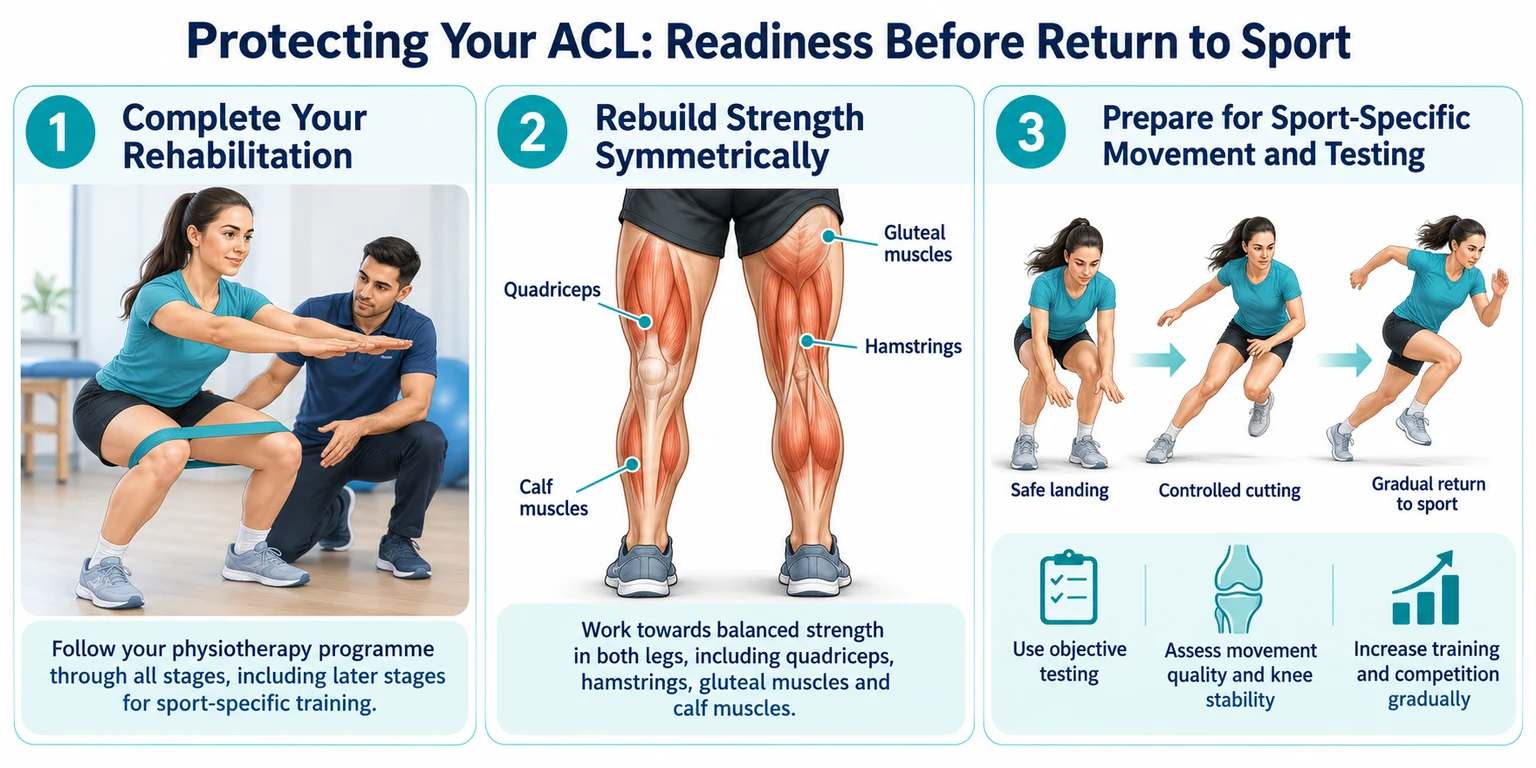
Protecting Your ACL: Readiness Before Return to Sport
Protecting Your ACL: Readiness Before Return to Sport. An illustrated summary of this article; individual assessment and recovery plans vary.
View full-size image (opens in a new tab)“Joint preservation and evidence-based conditioning are paramount. When surgical intervention is required, minimally invasive arthroscopy allows patients and competitive athletes to restore painless stability and confident motion.”
ACL & Meniscus Surgery & Recovery
Advanced ACL & Meniscus Repair Care | Dr. Pradyumna R. Watch Dr. Pradyumna R explain clinical diagnosis, surgical repair techniques, and recovery milestones.
Frequently Asked Questions
An ACL can re-tear because of a new twisting or pivoting injury, premature return to sport, inadequate rehabilitation, muscle weakness or surgical and anatomical factors.
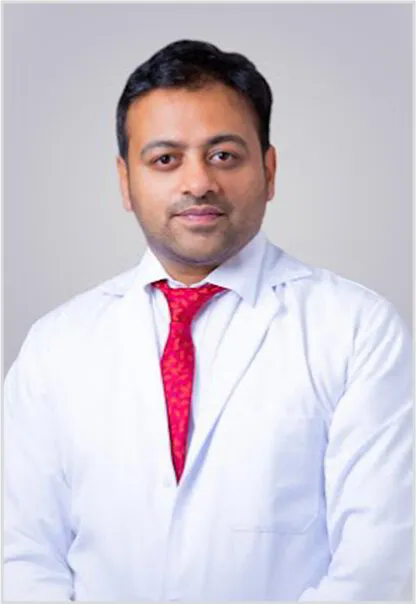
Dr. Pradyumna R
Verified SpecialistDr. Pradyumna R is a Consultant Orthopaedic Surgeon | Knee & Shoulder Surgery | Sports Medicine | Arthroscopy | Joint Replacement. He completed sub-specialty fellowship training in shoulder, elbow, and knee arthroscopy at the Technical University of Munich (TUM), Germany. He has performed over 5,000+ successful joint surgeries and practices at Bangalore Orthopaedic Clinic (JP Nagar) and Manipal Hospitals.