
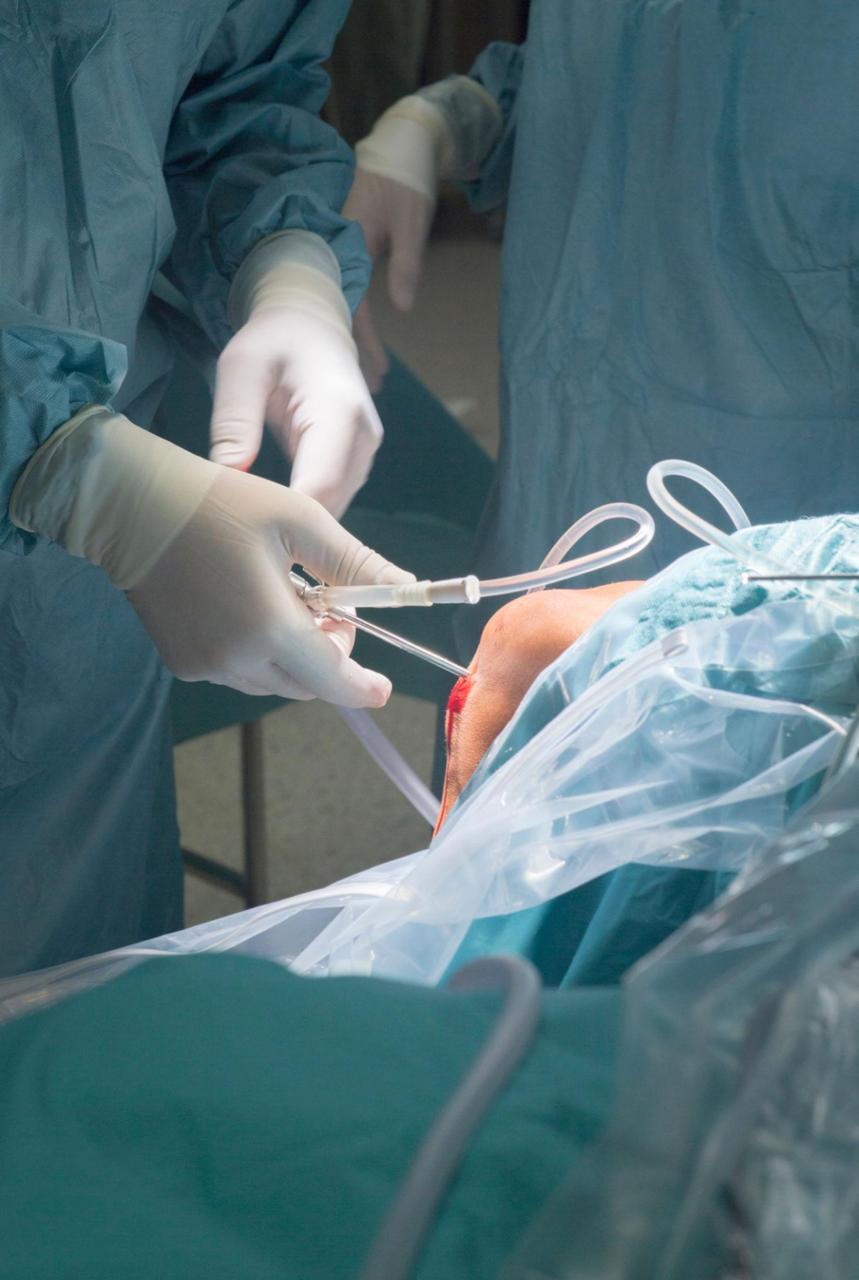
Learn about dislocated patella (kneecap dislocation) symptoms, causes, non-surgical treatment, MPFL reconstruction surgery, recovery, and prevention with Dr. Pradyumna R in Bangalore.
Reviewed by: Dr. Pradyumna R
A sudden twist of the knee, an awkward landing during sports, or a direct blow can sometimes cause the kneecap to slip out of its normal position. This injury is known as a patellar dislocation or kneecap dislocation. For many patients, the kneecap moves toward the outside of the knee. While it may occasionally move back into position on its own, a patellar dislocation should not simply be ignored. The injury can damage the ligaments and cartilage that help stabilize the kneecap, and some patients may develop repeated episodes of instability. If you are looking for dislocated patella treatment in Bangalore, early assessment by an orthopaedic specialist can help determine the extent of the injury and whether treatment requires bracing and physiotherapy or surgical stabilization.
What Is a Patellar Dislocation?
The patella, or kneecap, normally sits within a groove at the end of the thigh bone called the trochlear groove. As the knee bends and straightens, the patella glides within this groove. A patellar dislocation occurs when the kneecap is forced completely out of this normal track, most commonly toward the outer side of the knee. A first-time dislocation may occur because of trauma. However, recurrent dislocations can sometimes indicate an underlying problem with the anatomy or stability of the knee.
Symptoms of a Dislocated Patella
Symptoms usually begin suddenly and may include:
Sometimes the patella returns to its normal position before the patient reaches the hospital. Even in this situation, evaluation by a kneecap dislocation doctor in Bangalore may be important because ligament, bone or cartilage injuries can remain.
What Causes the Kneecap to Dislocate?
Patellar dislocations frequently occur during sports or activities involving sudden changes in direction and are among the most frequent sports injuries seen in active individuals. Common mechanisms include twisting the knee while the foot remains planted, landing awkwardly after a jump, or receiving a direct impact to the knee. Certain anatomical factors can also make the kneecap more prone to instability. These may include a shallow trochlear groove, abnormal alignment of the leg, a high-riding patella, ligament laxity or previous patellar injuries. Young and physically active individuals may be particularly susceptible.
How Is a Patellar Dislocation Diagnosed?
Diagnosis begins with an examination of the knee. The orthopaedic surgeon assesses swelling, tenderness, kneecap position, range of motion and overall knee stability. Imaging may include:
In patients with recurrent instability, additional imaging measurements may be required to understand why the kneecap repeatedly moves out of position.
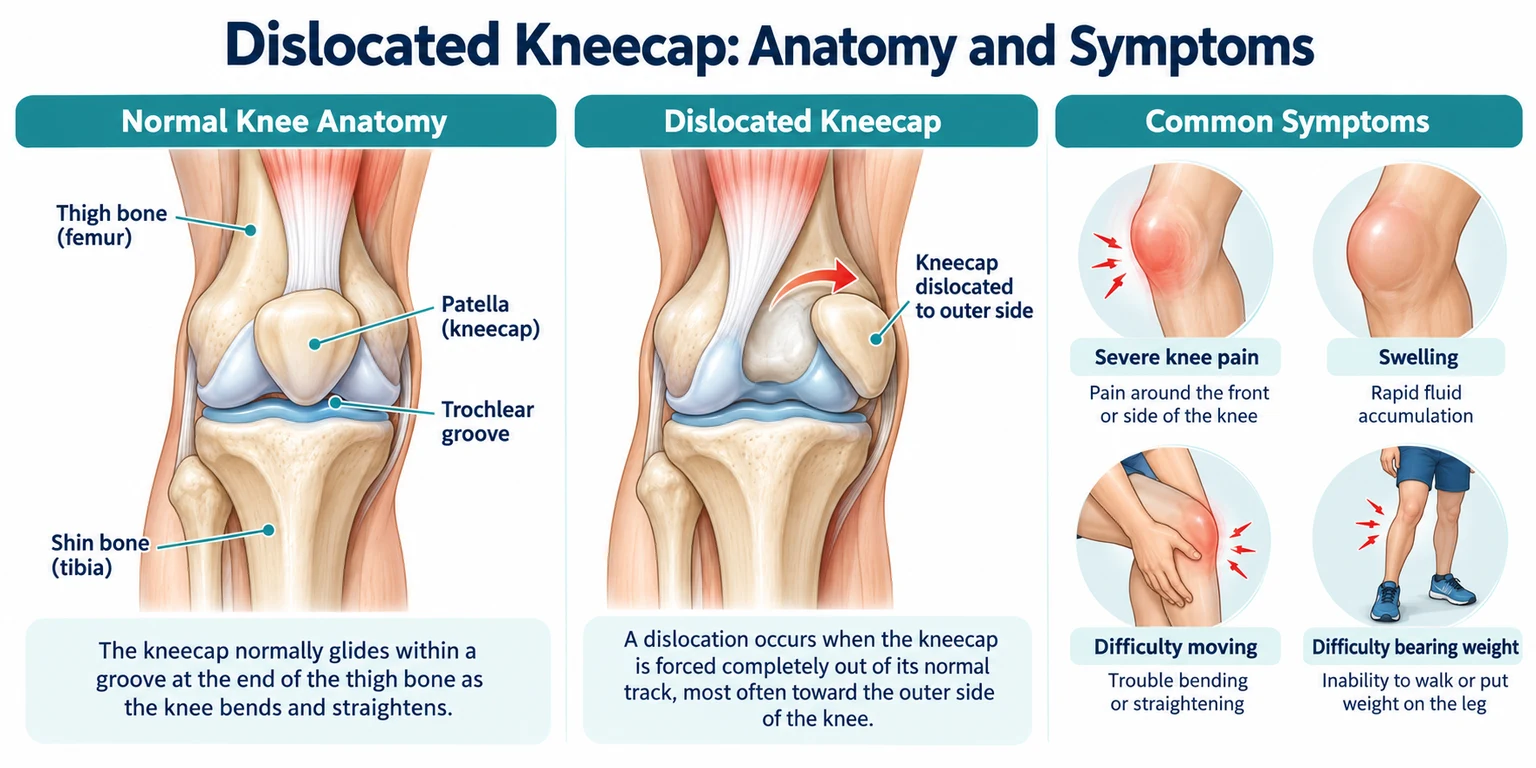
Dislocated Kneecap: Anatomy and Symptoms
Dislocated Kneecap: Anatomy and Symptoms. An illustrated summary of this article; individual assessment and recovery plans vary.
View full-size image (opens in a new tab)Treatment for a First-Time Patellar Dislocation
Treatment depends on the severity of the injury and whether associated cartilage, bone or ligament damage is present. If the kneecap remains dislocated, a doctor may perform a procedure called reduction, in which the patella is carefully guided back into its normal position. After reduction, treatment may involve a knee brace for a limited period, pain and swelling management, gradual weight-bearing and targeted physiotherapy. Rehabilitation is particularly important. Strengthening the quadriceps and muscles around the hip can improve control of the kneecap and help restore confidence in the knee. Many first-time uncomplicated dislocations can therefore be treated without surgery.
When Is Patella Dislocation Surgery Needed?
Surgery is not necessary for every patient. However, patella dislocation surgery in Bangalore may be considered when there are:
The appropriate procedure depends on the individual cause of the instability.
Patellar Stabilization Surgery
One commonly performed procedure for recurrent patellar instability is MPFL reconstruction. The MPFL is an important ligament on the inner side of the knee that helps prevent the kneecap from moving excessively outward. It is frequently injured when the patella dislocates. During MPFL reconstruction, the damaged stabilizing ligament is reconstructed, usually using a tendon graft, to help restore kneecap stability. Some patients have structural abnormalities that require additional corrective procedures. The surgical plan should therefore be based on detailed clinical examination and imaging rather than treating every recurrent dislocation in the same way. Patients searching for patellar instability surgery at Manipal Hospital Bangalore or a recurrent patella dislocation specialist in Bangalore should ideally undergo a detailed assessment to identify the underlying reason for instability before deciding on knee surgery.
Recovery After a Patellar Dislocation
Recovery varies according to the severity of the injury and whether surgery is required. After a straightforward first-time dislocation treated without surgery, patients generally progress gradually through swelling control, restoration of knee movement, strengthening and functional rehabilitation. Returning to sports usually takes longer than simply returning to normal walking because the knee must regain adequate strength, balance and dynamic stability. Following stabilization surgery, rehabilitation is more structured and may continue for several months. Return to running, jumping and competitive sports should be based on healing, strength and functional testing rather than time alone.
Can Patellar Dislocation Cause Long-Term Problems?
Most patients can recover well with appropriate treatment. However, repeated dislocations may damage the cartilage behind the kneecap and increase the risk of persistent pain and patellofemoral problems. Another concern is psychological confidence. Some patients become hesitant to run, jump or change direction because they feel that the kneecap could dislocate again. This is why recurrent instability deserves a thorough assessment rather than repeatedly treating each episode with rest alone. Patients seeking guidance on knee pain treatment in Bangalore can benefit from early intervention to preserve joint health.
If you have experienced a first-time kneecap dislocation or your kneecap repeatedly slips out of position, identifying the reason for the instability is an important part of treatment. Dr. Pradyumna R is an orthopaedic surgeon with expertise in sports medicine, knee arthroscopy and complex knee injuries, including the evaluation and surgical management of recurrent patellar instability. At
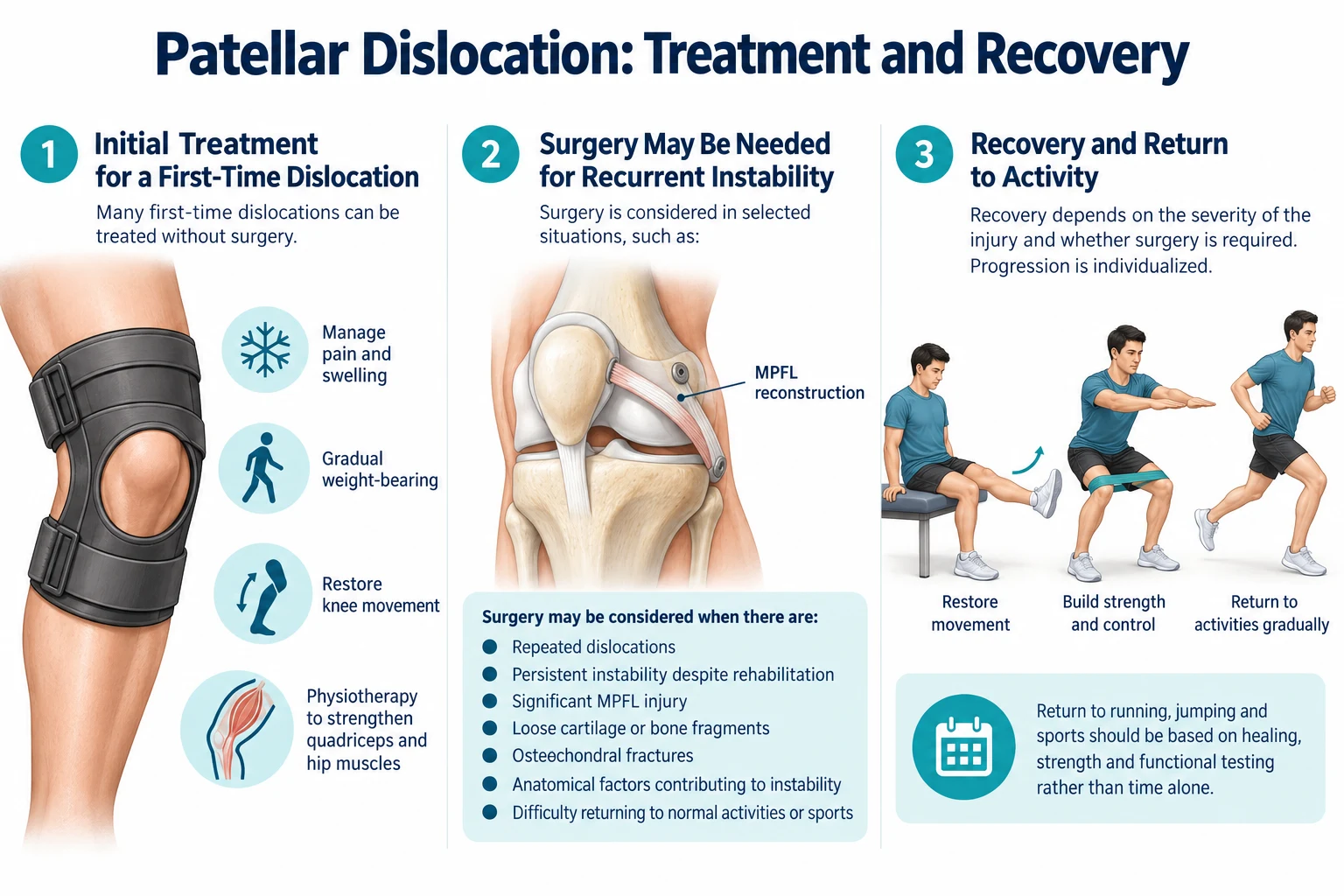
Patellar Dislocation: Treatment and Recovery
Patellar Dislocation: Treatment and Recovery. An illustrated summary of this article; individual assessment and recovery plans vary.
View full-size image (opens in a new tab)“Joint preservation and evidence-based conditioning are paramount. When surgical intervention is required, minimally invasive arthroscopy allows patients and competitive athletes to restore painless stability and confident motion.”
ACL & Meniscus Surgery & Recovery
Advanced ACL & Meniscus Repair Care | Dr. Pradyumna R. Watch Dr. Pradyumna R explain clinical diagnosis, surgical repair techniques, and recovery milestones.
Frequently Asked Questions
Common symptoms include sudden knee pain, swelling, visible displacement of the kneecap, difficulty walking or straightening the knee and a feeling of instability.

Dr. Pradyumna R
Verified SpecialistDr. Pradyumna R is a Consultant Orthopaedic Surgeon | Knee & Shoulder Surgery | Sports Medicine | Arthroscopy | Joint Replacement. He completed sub-specialty fellowship training in shoulder, elbow, and knee arthroscopy at the Technical University of Munich (TUM), Germany. He has performed over 5,000+ successful joint surgeries and practices at Bangalore Orthopaedic Clinic (JP Nagar) and Manipal Hospitals.